
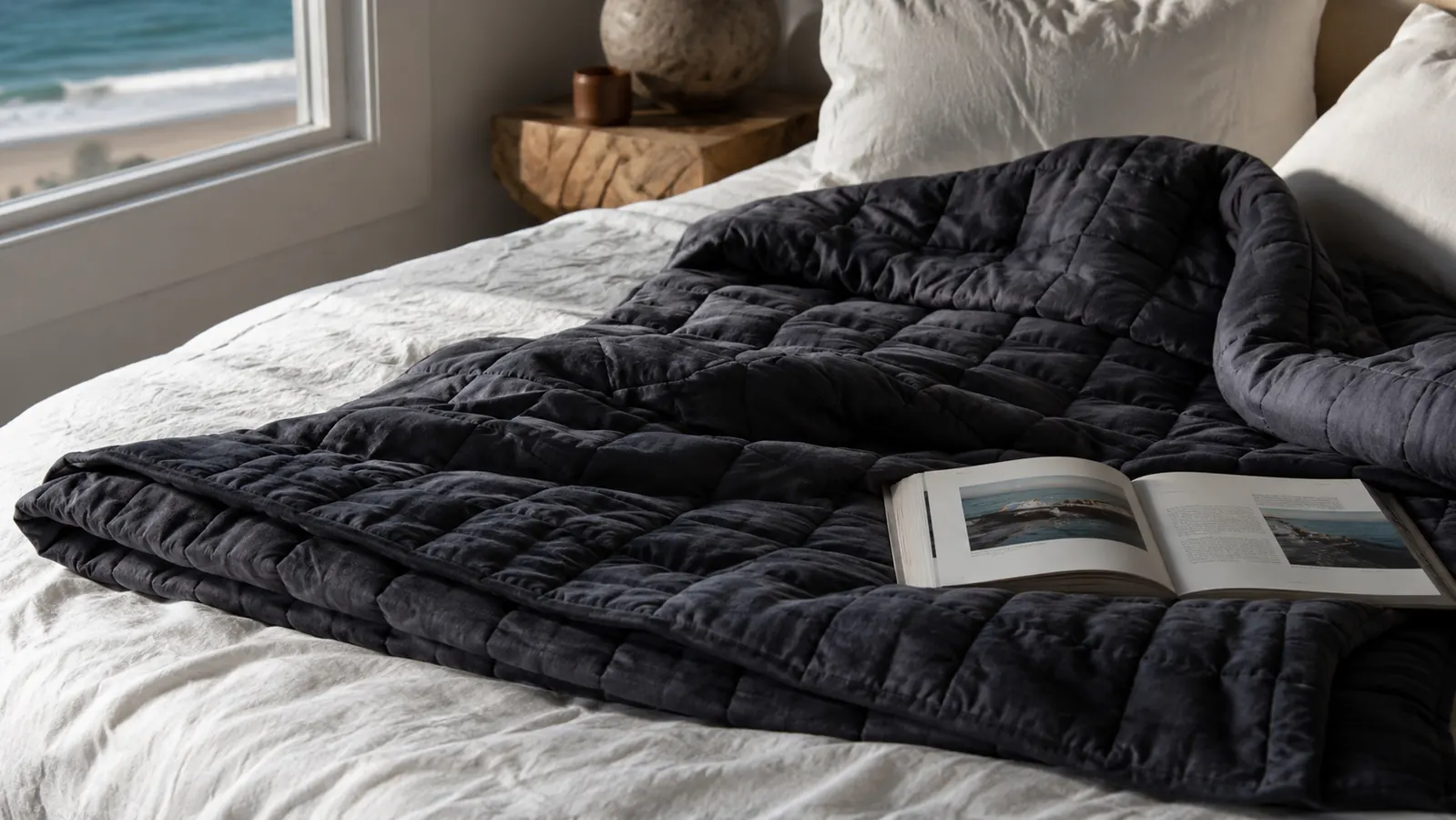
Let me tell you what the product listing does not mention. It does not mention the first three nights, when 15 pounds feels less like a hug and more like someone left their coat on you. It does not mention that the cotton cover needs a machine large enough to hold a small sleeping bag, or that in July, on a warm coastal night, you will kick the whole thing off by 2 AM and wake up wondering what you spent your money on. I use the Weighted Idea cooling weighted blanket, the 15-pound dark grey cotton version, and I want to give you the version of this review I wish I had read before I bought it.
This is not a teardown. I still use the blanket. It sits on my bed right now. But I have talked to enough friends who bought weighted blankets, hated the first week, and returned them before the real benefit had a chance to kick in, that I feel a responsibility to tell you exactly what that first week looks like, who this blanket is genuinely wrong for, and why, if you are the right kind of sleeper, the calm-down effect is as real as people say.
The Quick Verdict
A legitimately effective weighted blanket for anxiety-driven restlessness in cool sleepers, with real tradeoffs around warmth and laundry that the listing glosses over.
Amazon Check Today's Price →If you run warm at night, read the temperature section before you buy.
The Weighted Idea blanket uses breathable cotton and glass beads, not polyester fill, which helps. But it is still 15 pounds. Scroll down to the temperature section, then decide. If you are still in, the current price is reasonable for what you get.
Amazon Check Today's Price on Amazon →The Adjustment Week: What Nobody Told Me
I had read that some people need a few nights to adjust. I assumed that meant one or two nights of mild discomfort followed by bliss. The reality for me was closer to five nights of disrupted sleep before things improved. The weight does not feel calming when you are already a light sleeper who notices every sensation. It feels present. It feels like something is on you. My brain spent the first several nights cataloguing that sensation rather than relaxing into it.
Night four was the turning point. I woke up in the morning and realized I had not moved as much as I usually do. I sleep with my husband, and he often mentions that I shift around. He did not mention it after night four. By night six, something had genuinely shifted. The weight that had felt intrusive now felt like a settled, quiet pressure. I stopped noticing it as a thing on me and started noticing the absence of the restless, itchy-legs feeling I usually fall asleep fighting. That shift is real. But the five nights before it are also real, and you need to know about them.
How the Weighted Idea Blanket Is Built
The blanket is 48 inches by 72 inches, which is designed for one person. That sizing matters. If you share a bed and try to use it as a shared blanket, neither person gets the full body coverage that makes the deep-pressure effect work. The 15-pound recommendation follows the rough guideline of about 10 percent of your body weight, so it suits adults in the 130-to-170-pound range. I am 152 pounds and the weight feels well-distributed across my body rather than concentrated in one spot.
The fill is glass beads stitched into small quilted pockets. This is a better construction than plastic pellet alternatives because the beads lie flatter and the blanket drapes more naturally over your body contours rather than pooling in the center. The outer cover is 100 percent cotton. That matters for temperature. Polyester-fill weighted blankets are genuinely warm in a way that can disrupt sleep for adults who already run hot. Cotton breathes. The glass beads do not retain heat the way foam or fiber fill does. These are the structural reasons the blanket is marketed as cooling. They are real reasons, with a caveat I will get to.

The Temperature Caveat Nobody Highlights
Yes, the cotton and glass bead construction is cooler than a synthetic weighted blanket. But 15 pounds is still 15 pounds of insulation. If you live somewhere warm, if you are going through hormonal shifts that cause night sweats, or if you simply run hot as a baseline, the word cooling on the listing is doing a lot of work. In my experience, the blanket sleeps comfortably in my coastal bedroom from October through April. From May through September, I run the ceiling fan and still find myself kicking the blanket to the side between about 2 and 4 AM on warmer nights.
I kept it on my bed through one full summer because the deep-pressure benefit for my restless legs felt worth managing the temperature. But I want to be clear: this is not a truly cooling blanket in the way that a cooling mattress topper changes your core temperature. It is less warm than a comforter of similar weight. That is a meaningful difference, but it is not the same as actively sleeping cool. If temperature is your primary sleep problem, this is not the product to solve it.
The word cooling on the listing is doing a lot of work. Less warm than a comforter is not the same as actually sleeping cool. Know the difference before you buy.
The Laundry Situation
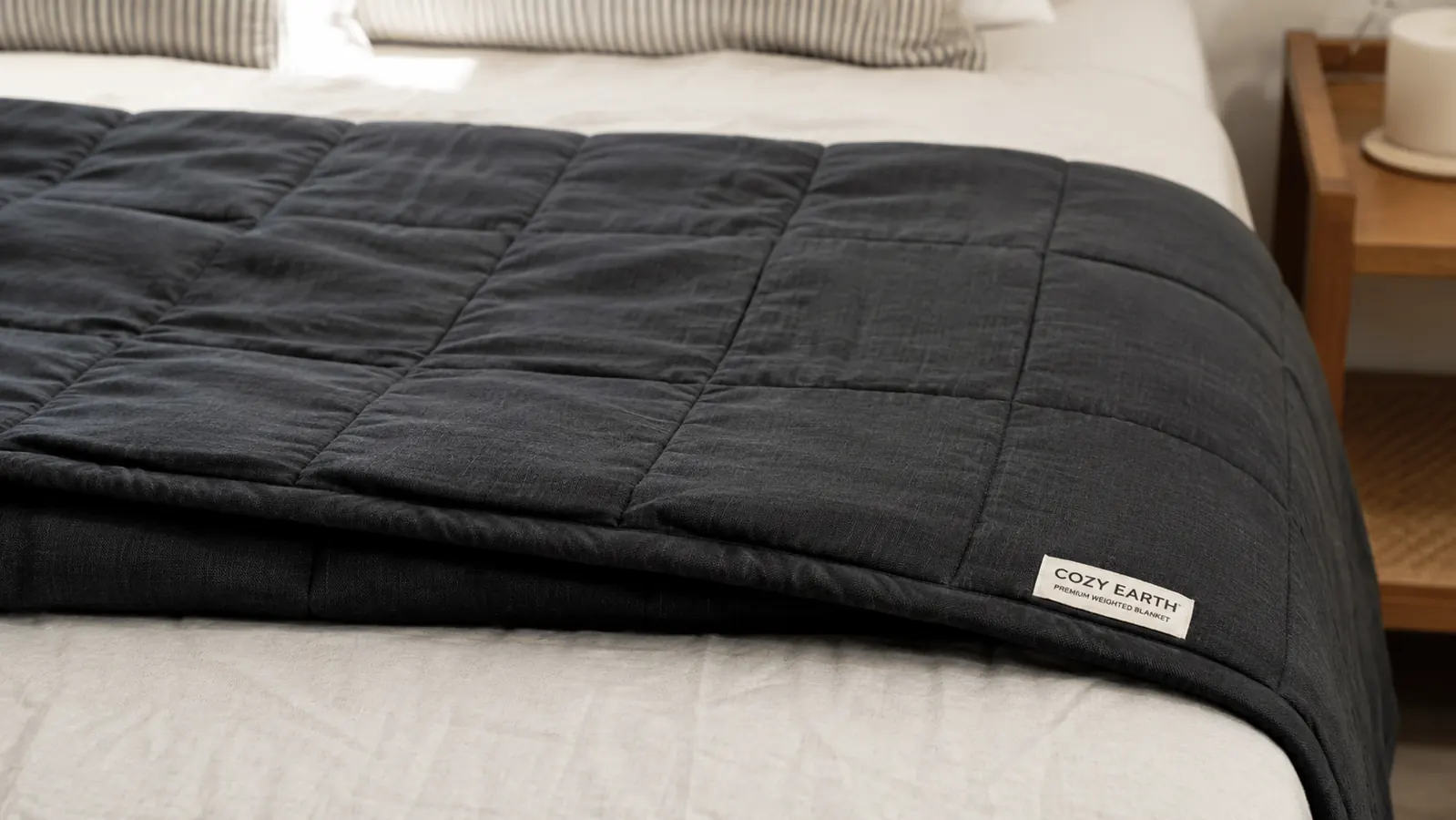
I want to spend a real paragraph on this because it came up in almost every conversation I had with friends who returned their weighted blankets. The Weighted Idea blanket has a removable cotton cover. Washing the cover is straightforward, exactly like washing a standard duvet cover. But the inner weighted insert is a different matter. At 15 pounds, it requires a large-capacity washing machine. My home machine is a standard residential front-loader, and the insert barely fits. When I first tried to wash it, the load was so heavy the machine struggled through the spin cycle and the blanket came out still damp in the center.
My current solution is to wash the removable cover at home every two to three weeks and take the inner insert to a large-capacity commercial machine at the laundromat every few months. That added step is inconvenient. I would rather not need it. But it is the honest reality of owning a glass-bead weighted blanket of this weight. If you have a large-capacity washer at home (usually marketed as being able to handle king comforters), you may be fine. If you have a standard residential machine, plan for the laundromat trip a few times a year.
What the Deep-Pressure Effect Actually Feels Like Over Time
Once I was past the adjustment week, the effect became consistent and predictable. The best way I can describe it is that the blanket reduces the gap between lying down and actually letting go. I have always been a slow-to-settle sleeper. My brain keeps rehearsing the next day's list. With the weighted blanket, there is a physical grounding that seems to interrupt that loop earlier. I still think. I just stop thinking sooner.
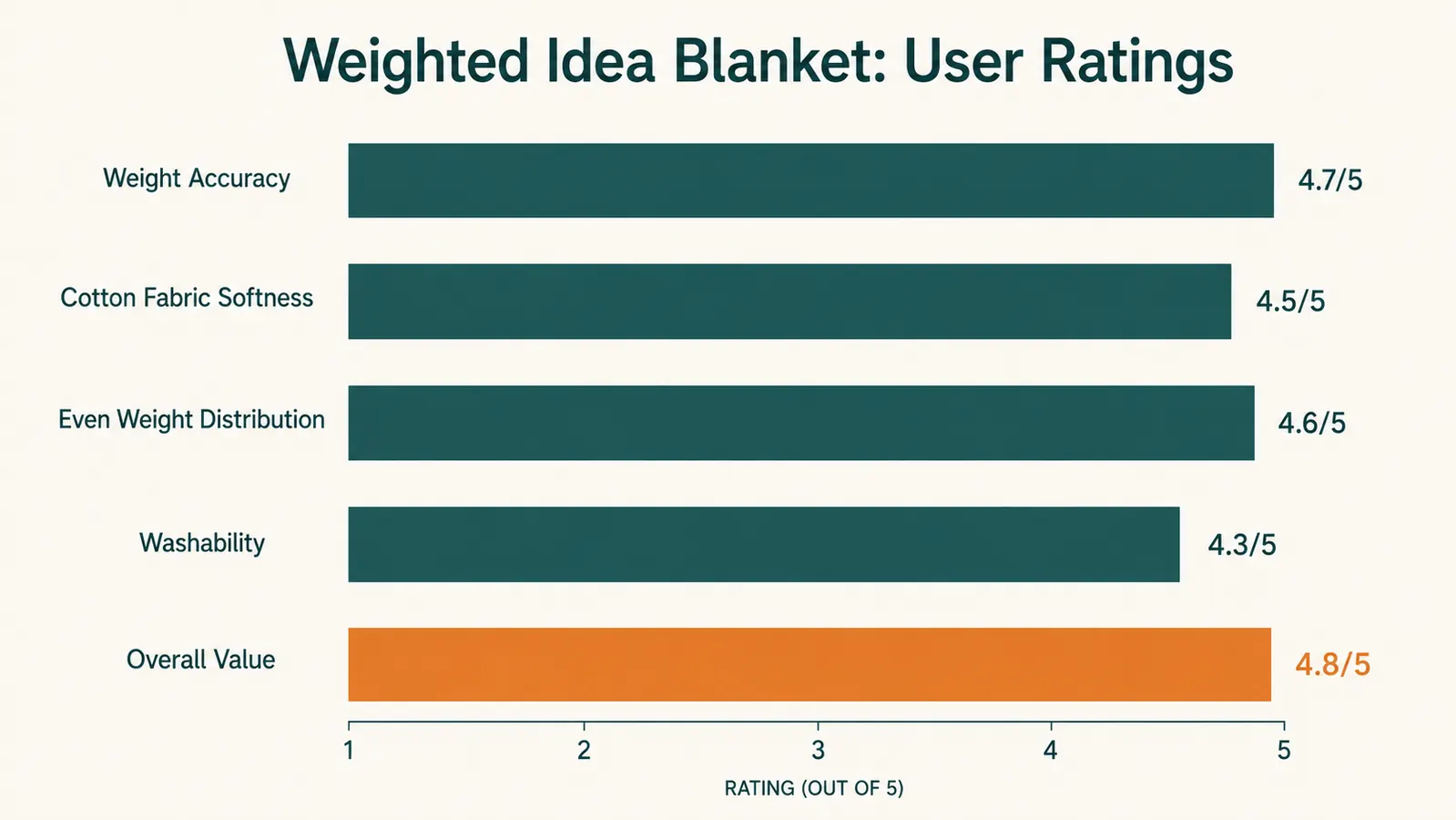
The blanket has 4.6 stars across more than 20,000 reviews, and I think that rating is accurate for the right buyer. The reviews that give it one or two stars cluster around three complaints: too hot, adjustment week was miserable, and laundry problems. Every one of those complaints is valid. The reviews that give it five stars tend to come from people who run cool, pushed through the adjustment, and have a large-capacity washer. I sit somewhere in between, which is why I landed at 4.2 stars rather than 5.
Comparing It to My Regular Comforter
My previous bedding was a lightweight down-alternative comforter, which I have used for years. The main practical difference is not warmth or softness but stillness. Under a regular comforter, my legs would shift position every 20 or 30 minutes. Under the weighted blanket, they do not. The gentle, even pressure seems to reduce the impulse to move. That is the single biggest change I have noticed, and it is more significant than I expected before I started using it.
For anyone reading my other articles on this site, I want to be clear that the weighted blanket comparison article goes deeper on how the two stack up side by side, with more detail on weight distribution and materials. This piece is specifically about the honest tradeoffs and who the blanket serves well.
| Weighted Idea Weighted Blanket (15 lb) | Regular Down-Alternative Comforter | |
|---|---|---|
| Weight | 15 lbs (glass bead fill) | 2-3 lbs (down alternative) |
| Size (this review) | 48 x 72 in (single-person) | Full/Queen (shared use) |
| Cover Material | 100% cotton, removable | Polyester shell |
| Sleep Temperature | Cool-ish (better than polyester weighted) | Cool to warm depending on fill |
| Restlessness Effect | Strong reduction in leg shifting | None |
| Laundry | Insert needs large-capacity machine | Standard home machine fine |
| Adjustment Period | 5-7 nights for most adults | None |
What I Liked
- Deep-pressure effect is genuine and consistent after the adjustment week
- Glass bead fill distributes weight evenly without pooling
- Cotton cover breathes better than polyester alternatives
- Removable cover makes regular cleaning manageable
- One-person sizing means you get the full benefit, not diluted coverage
- Price point is reasonable compared to similar-weight cotton competitors
Where It Falls Short
- Adjustment week is disruptive, not mild, for sensitive sleepers
- 15 lbs is still warm despite the cotton construction, especially in summer
- Inner insert requires a large-capacity washing machine or laundromat
- One-person sizing means couples need two blankets to both benefit
- Not effective for primary temperature problems, only for restlessness
Who This Blanket Is For
You are the right buyer if restlessness, not temperature, is your primary sleep problem. If your legs move too much, if your mind stays active too long after you lie down, if you wake up several times a night and cannot identify a clear cause, the deep-pressure effect addresses that specific pattern. You are also the right buyer if you sleep in a naturally cool environment, if you have a large-capacity washer at home, and if you can commit to using the blanket every night for at least a week before judging it. All three of those conditions matter.
You are also a good fit if you are a solo sleeper who wants full-body coverage. The 48-by-72-inch size is ideal for one person in a full or queen bed. You can tuck it around yourself without competition. If you share a bed and your partner also wants the weighted blanket benefit, the honest recommendation is two separate blankets rather than stretching one between you.
Who Should Skip It
If night sweats or general overheating is your primary sleep disruptor, skip this blanket. The cooling marketing is not false exactly, but it sets up an expectation this blanket cannot meet for hot sleepers. A cooling mattress topper, better bedding ventilation, or a room temperature change will do more for you than a weighted blanket will.
Also skip it if you have any respiratory issues that make weight on your chest uncomfortable, if you have claustrophobia triggered by confinement, or if you are caring for a very young child or elderly adult, for whom a 15-pound blanket is not safe. And skip it if you genuinely cannot commit to the adjustment week. Returning it after night two will feel like a waste of money and will not give you a fair picture of whether it works. If your schedule or situation means you need to sleep well immediately right now, this is the wrong month to start.
Why It Still Earned Its Spot on My Bed
I have spent the last several paragraphs on the honest downsides, so let me be equally honest about why I kept the blanket. The restless-leg shifting that used to keep me in a half-awake state most nights is largely gone. I fall asleep faster. When I wake up in the middle of the night, I settle back down more quickly. Those changes are not dramatic or sudden. They accumulated over the first few weeks and then became the new normal. I stopped noticing the blanket as something I was testing and started noticing when I slept without it.
The glass bead construction holds up. After months of use, the beads have not shifted into uneven clumps, which is a known issue with cheaper poly-fill weighted blankets. The cotton cover has washed well without pilling. And at the current price, it is one of the more affordable 15-pound cotton options I found when I was shopping. None of that is exciting product copy. It is just the accurate summary of a blanket that does what it says, for the right person, if you know what you are actually buying.
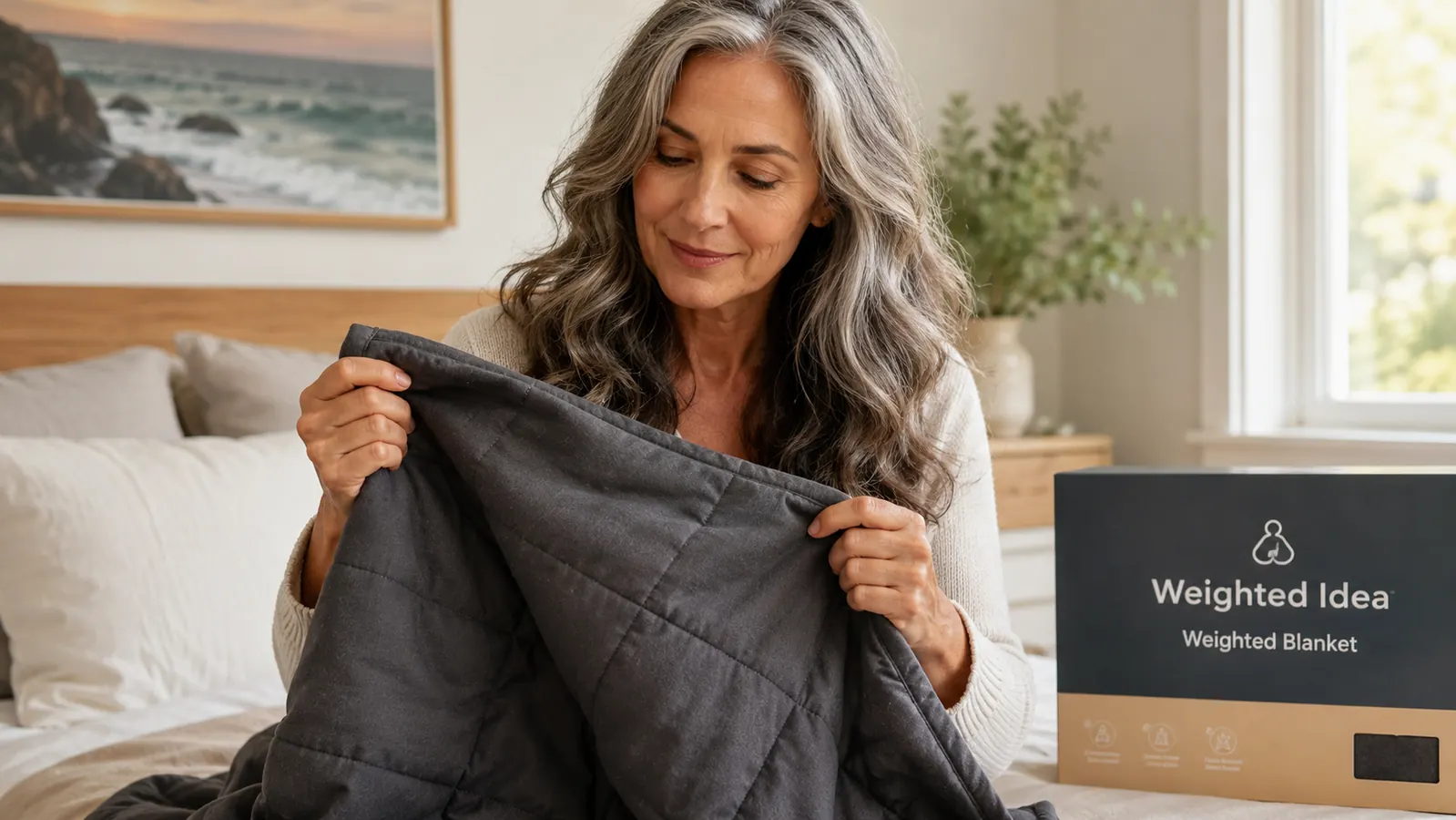
If you have read this far and still want to try it, that is a good sign it is the right fit for you.
The readers who benefit most from the Weighted Idea blanket are the ones who understood the adjustment week before they started, not the ones who hoped it would be immediately comfortable. Check today's price on Amazon and read a few of the recent reviews, especially the ones that mention temperature, to see how they compare to your own sleep situation.
Amazon Check Today's Price on Amazon →