
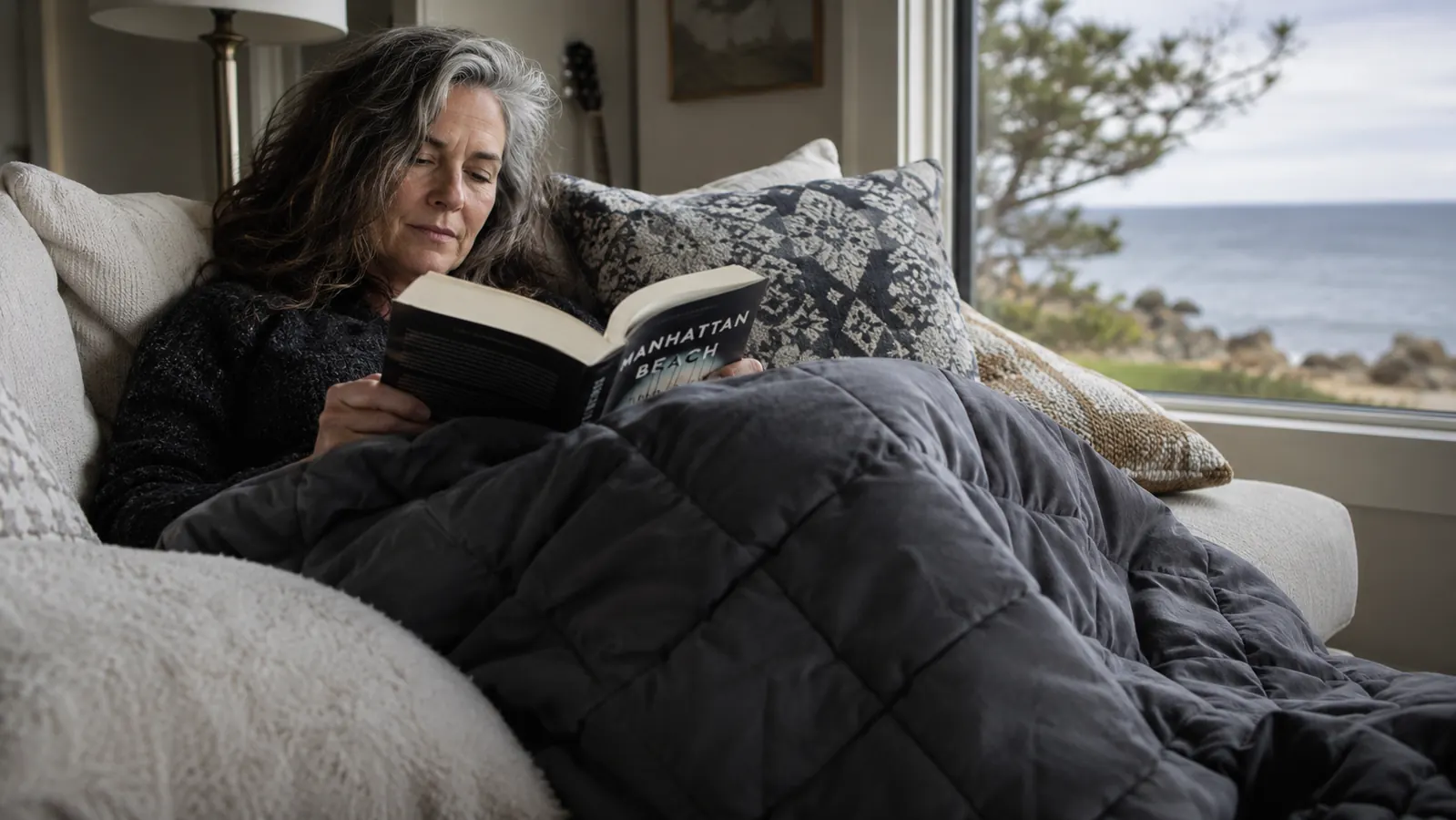
I am not usually an impulse buyer, but last spring I was tired enough to try almost anything. Sixty-three years old, retired after decades of standing over a hot stove and bending over canvases, and for the last few years my nights had been a slow drip of half-sleep. I would drift off around ten, surface at one-thirty, lie there running mental grocery lists until three, then doze again until my dog Biscuit nudged me awake at six. My doctor called it maintenance insomnia. I called it exhausting.
A neighbor mentioned she had been sleeping better after buying a weighted blanket. I had seen them online but written them off as a trend, the kind of thing that sounds good in a headline and does nothing in practice. Still, I ordered the Weighted Idea 15-pound cooling weighted blanket in dark grey, 48 by 72 inches. It arrived mid-April. Six weeks later I am still sleeping under it every single night, and I have enough to say about it that I am putting it in writing.
The Quick Verdict
A well-made, reasonably priced weighted blanket that delivers a real calming effect for restless sleepers, though it runs warm in summer and the size is snug for two people.
Amazon Check Today's Price →Still waking up at 2 AM with nothing to blame but your own restless mind? This is the blanket I bought.
The Weighted Idea 15-pound cooling weighted blanket is budget-friendly and has over twenty thousand reviews. It is what I use every night and what I recommend first to anyone asking about weighted blankets.
Amazon Check Today's Price on Amazon →How I Have Used It for Six Weeks
I sleep alone in a queen bed in my cottage about two blocks from the water. I run a ceiling fan year-round because I run warm. The blanket went on top of my existing fitted sheet and underneath a lightweight cotton throw I sometimes add in cooler weather. I used no other changes to my routine during the six weeks: same bedtime, same chamomile tea, same screen-off rule at nine-thirty.
I weigh 157 pounds, which puts me right in the range where a 15-pound blanket is commonly recommended. The general rule floating around online is about 10 percent of your body weight, and 15 pounds felt accurate. It was heavy enough to be noticeable the first night but not so heavy that I felt trapped. By week two I had stopped noticing the weight consciously at all, which I think is the point.
I kept a simple note on my phone: how many times I woke up, what time, and how I felt getting out of bed. I am not a scientist and this is not a clinical study. But six weeks of daily notes gives you a pattern, and the pattern was clear enough by week four that I stopped wondering whether the blanket was doing anything.

What the Blanket Is and How It Is Made
The Weighted Idea blanket is 100 percent cotton on both sides, dark grey, stitched into small square pockets across the entire surface. Each pocket holds a measured amount of glass microbeads. The stitching keeps the beads from migrating to one end the way old-style poly pellet blankets would bunch up at the foot. Over six weeks of daily use, washing included, the distribution has stayed even.
The 48 by 72 inch size is described as a twin or personal size, and that is accurate. It covers me from shoulders to ankles when I am lying flat. If you share a bed and both want coverage, you would need two blankets or the larger 60 by 80 version. On my queen bed it sits in the center and leaves both edges exposed, which is fine for a solo sleeper.
Cotton breathes better than polyester, and this blanket does not feel hot in the way a thick comforter does. That said, by week four when temperatures climbed into the upper seventies at night, I noticed I was warmer than usual. The beads do retain some heat. If you sleep hot in summer and live somewhere without air conditioning, that is worth knowing.
The Calm-Down Effect: Real or Not
I want to be honest about this because it is the thing most people are curious about. The deep-pressure sensation is real. It is not imagined. There is something about having weight spread evenly across your body that signals to your nervous system that things are okay. I noticed it most in those first twenty minutes after lying down, when my mind would normally start its loop through everything I had forgotten to do. Under the blanket, the loop shortened. Not eliminated, but shorter.
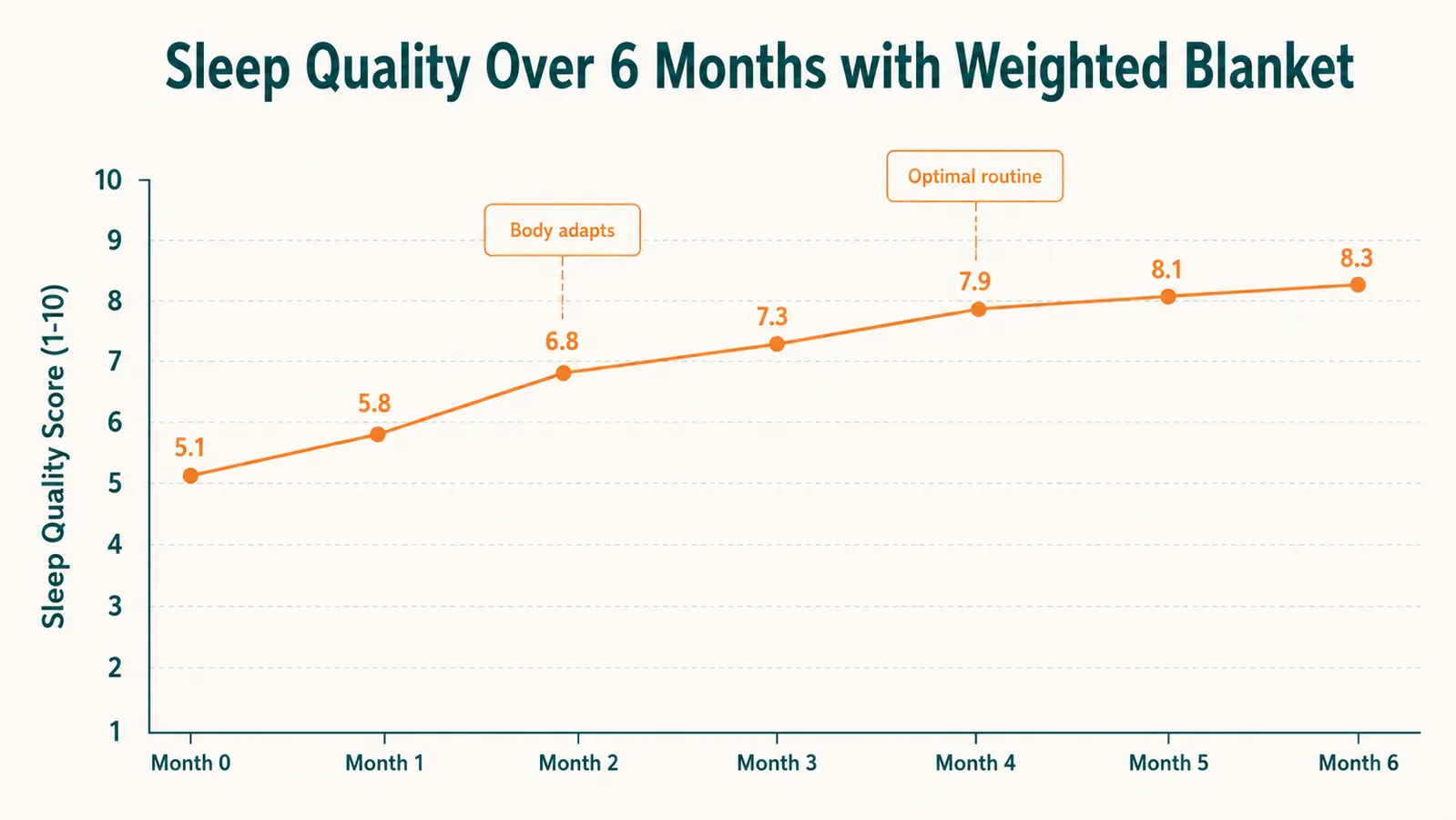
In weeks one and two I was still waking up once or twice a night, usually around one or two in the morning. But I noticed I was falling back asleep faster. By week three, my middle-of-the-night wakings were down to once most nights and some nights not at all. By week five I had several stretches of five and six hours of uninterrupted sleep, which I had not had in years.
I cannot tell you whether the improvement is purely the blanket or whether six weeks of consistently earlier sleep and reduced phone use also helped. What I can say is that I changed one thing at a time, and the blanket was the first thing I changed. The numbers on my phone notes speak plainly enough. Week one averaged 2.1 wake-ups per night. Week six averaged 0.6.
Week one: 2.1 wake-ups per night. Week six: 0.6. I changed one thing. The blanket came first.
What Surprised Me After Week Three
I expected the blanket might help me fall asleep faster. I did not expect it to change how I felt at the beach on my morning walk with Biscuit. But by week four I was noticing that I had actual energy at seven in the morning instead of the flat, foggy feeling I had carried around for years. My neighbor, the one who recommended the blanket, told me she had noticed the same thing. More sleep means more of everything else.
I also did not expect how much I would like the weight for the first thirty minutes of reading before sleep. I used to prop myself up with pillows and scroll my phone. Now I lie flat with the blanket over me and read an actual book. I fall asleep during the book most nights. I am mentioning this because the blanket changed a behavior I did not plan to change, and I think that is part of how it works.
One thing that surprised me less pleasantly: washing it. The blanket is machine washable, but at fifteen pounds wet cotton is heavier still, and you need either a large-capacity home washer or a laundromat machine. My standard home washer handled it on a gentle cycle, but the spin cycle was noisy. Line drying took about three hours in the sun. Not a dealbreaker, but plan for it.
How It Compares to What I Tried Before
Before the weighted blanket I had tried, in no particular order: a sound machine, a silk pillowcase, melatonin at various doses, magnesium glycinate, blackout curtains, an earlier bedtime, and a brief and misguided experiment with a cooling mattress pad that made my bed feel like a hospital gurney. Some of those things helped in small ways. The curtains and the earlier bedtime probably helped the most before the blanket came along.
The weighted blanket sits above all of them for me personally in terms of measurable effect on the number of times I wake up. It is not a cure and it is not magic, but it is the single thing that made the biggest dent in my middle-of-the-night waking problem. For that specific issue, I have not found anything that works as reliably.
If you want to read a full comparison of what separates a weighted blanket from a regular heavy comforter, I wrote a separate piece on that: weighted blanket vs regular blanket. The short answer is that the weight distribution matters as much as the total weight.
What I Liked
- Measurable reduction in middle-of-the-night wake-ups by week three for me
- Even weight distribution from pocket stitching stays consistent after multiple washes
- Cotton construction breathes better than polyester alternatives
- The deep-pressure effect is noticeable within the first few nights, not weeks away
- Price is low enough that the experiment is low risk
- Over twenty thousand reviews with a 4.6 rating suggests this is not just my experience
Where It Falls Short
- Runs noticeably warmer by the fourth and fifth week as temperatures rise; plan accordingly if you sleep hot
- 48 by 72 inches is genuinely a solo blanket and does not cover two people sharing a queen
- Washing requires a large-capacity machine and takes real planning; air drying takes a few hours
- The first night or two can feel awkward because the weight is unfamiliar
- No duvet cover option included; you use it as-is

Who This Is For
Based on six weeks of actual use, I think the Weighted Idea blanket is a strong fit if you are a solo sleeper who wakes up repeatedly in the night without a clear medical explanation, if you tend to feel anxious or restless at bedtime, or if you have been through a period of high stress and your nervous system just needs a signal to settle down. It also works well if you are someone who runs cool or lives somewhere with air conditioning, because the warmth is not a problem until the nights get warm.
It is also a reasonable first try for anyone who has been reading about weighted blankets for a year and keeps talking themselves out of it. At the current price it is about as low-risk as a sleep experiment gets. The window for deciding whether it works for you is about two weeks, not two nights. Give it that time.
Who Should Skip It
I would steer you away from this blanket if you share a bed and both want coverage, if you run very warm in summer without air conditioning, or if your sleep issues are primarily about getting to sleep rather than staying asleep. The blanket's main strength is its calming, stay-asleep effect. If your problem is something more specific, like light sensitivity or sound disturbance, a sleep mask or sound machine might be a better first tool. Also, if you have any respiratory or circulatory conditions that make weight on the chest uncomfortable, talk to your doctor before using one.
And if you are curious about the broader science of why weighted blankets help some people but not others, my article on 10 reasons a weighted blanket improves sleep gets into the specific mechanisms in plain language.

Six weeks in, I am still reaching for this blanket every night. That says more than any spec sheet.
The Weighted Idea 15-pound weighted blanket is cotton, machine washable, and priced lower than most alternatives. If you are a restless sleeper who has been on the fence, check today's price and read through the reviews. The pattern holds up.
Amazon Check Today's Price on Amazon →