

For about three years, the first thing I noticed every morning was a dull, tight ache running from the base of my skull down into my right shoulder. I would lie there for a few minutes trying to decide if the stiffness was going to ease up or if it was going to set the tone for the whole day. Most of the time it set the tone. I blamed my mattress, my age, the ocean air. I tried a heating pad, a new pillowcase, a rolled-up towel under my neck. Nothing stuck.
What finally worked was simpler and less expensive than I expected. The problem was not my mattress, and it was not my age. It was my pillow. More specifically, it was the way a regular pillow holds your head at the wrong angle for hours at a time while your neck muscles try and fail to compensate. Once I switched to a cervical contour pillow, the Cozyplayer Adjustable Cervical Pillow for Sleeping in particular, the stiffness started fading within the first week. This guide is my attempt to pass along everything I figured out, in the order I wish I had learned it.
Still waking up sore? Your pillow is probably the whole problem.
The Cozyplayer cervical pillow has a 4.3-star rating across more than 16,000 reviews and is designed to hold your neck in a neutral position all night. Adjustable inserts let you dial in the exact loft you need.
Amazon Check Today's Price on Amazon →Step 1: Figure Out Whether Your Pillow Is Actually the Culprit
Before you spend money on anything, do this one test. Put your current pillow on the bed and lie down on your back with your eyes on the ceiling. Have someone take a photo of your neck from the side, or prop your phone up and do it yourself. What you are looking for is a gentle, neutral curve from the base of your skull to your upper back. If your chin is pushed up toward the ceiling, your pillow is too thick. If your head is drooping back toward the mattress with your chin tilting down, your pillow is too flat. Either position puts your neck muscles under strain that builds over six to eight hours of sleep.
If the photo shows any noticeable bend in your neck, your pillow is the problem. Most of us have been sleeping on pillows that are simply the wrong shape for how our body needs support. Standard pillows are rectangles of compressed filling. They are not built around the specific curve at the back of your neck, and they flatten or shift during the night. A cervical contour pillow, by contrast, is shaped with two ridges of different heights and a lower center section designed to cradle your head while the higher ridge fills the gap between your head and your shoulders.
Step 2: Choose the Right Cervical Pillow Height for Your Body
Not all cervical pillows are sized the same, and choosing the wrong height is the most common reason people try one of these pillows and give up after a week. The general rule is straightforward. If you are a side sleeper, you need the higher ridge of the pillow under your neck so your head stays level with your spine. If you are a back sleeper, you want the lower ridge, which keeps your neck in a gentle curve without pushing your chin up. The Cozyplayer has two distinct ridges on each side of the pillow, so you can actually flip it or rotate it to find what feels right.
The other piece of this is adjustable loft. The Cozyplayer ships with removable inner inserts, so if the standard height feels like too much, you can pull a layer out and try again the next night. I pulled out one thin insert on my first try because the higher ridge was just slightly too tall for my shoulder width. That small adjustment made the difference between waking up neutral and waking up sore. If you are between a size or tend to alternate between your back and your side during the night, start with all the inserts in place and remove one at a time over a few nights until your neck feels neutral in the morning.
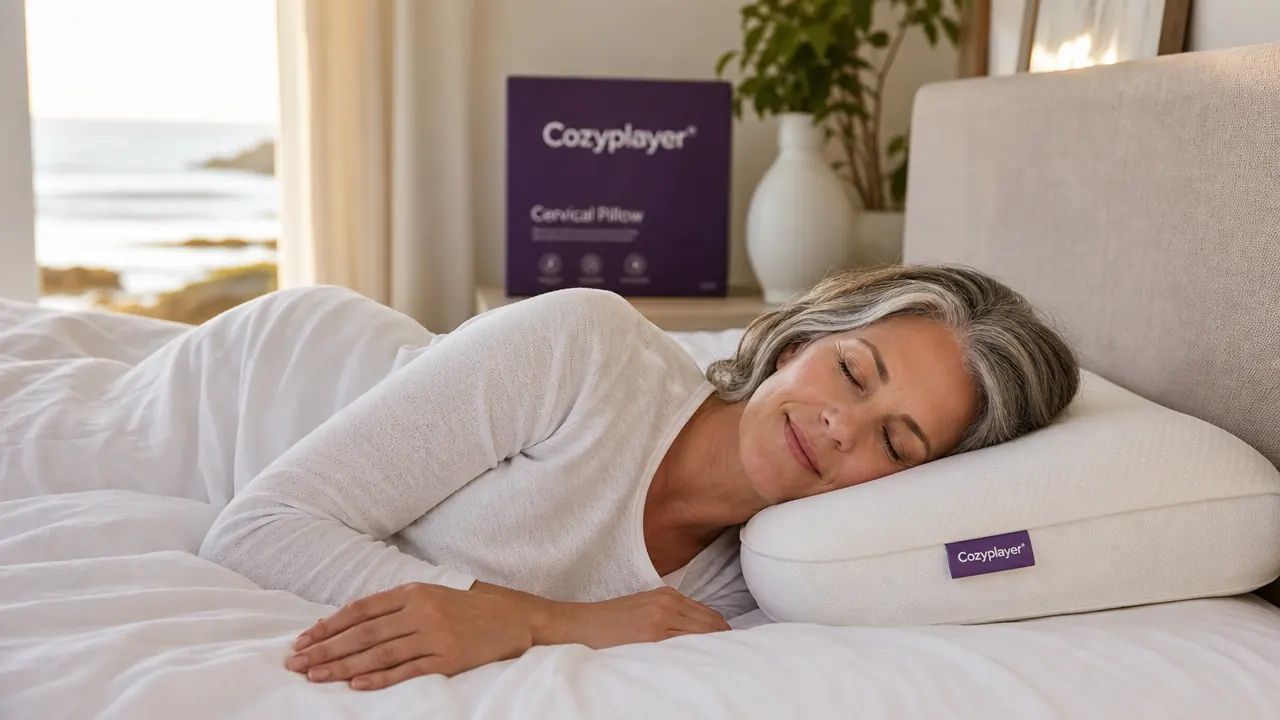
Step 3: Position the Pillow Correctly on Your First Night
A contour pillow only works if you put it in the right place on the bed. This sounds obvious but it took me a few nights to get it right. The pillow should sit low enough that your shoulders are resting on the mattress, not on the pillow itself. The goal is for the curved section of the pillow to sit right at the base of your skull, supporting the natural curve of your cervical spine, while your shoulders stay below. If the pillow creeps up so that your shoulders are on it, your neck is flat and you lose the support benefit.
For the first few nights, try going to bed a little earlier than usual so you have time to notice how the pillow feels before you fall asleep. Lie down, settle in, and take note of how your neck actually feels. There should be a gentle, held feeling at the back of your neck, not pressure or strain. If something feels off, take a moment to slide the pillow up or down an inch. Over three or four nights your body will start to understand where to settle, and the positioning becomes natural.
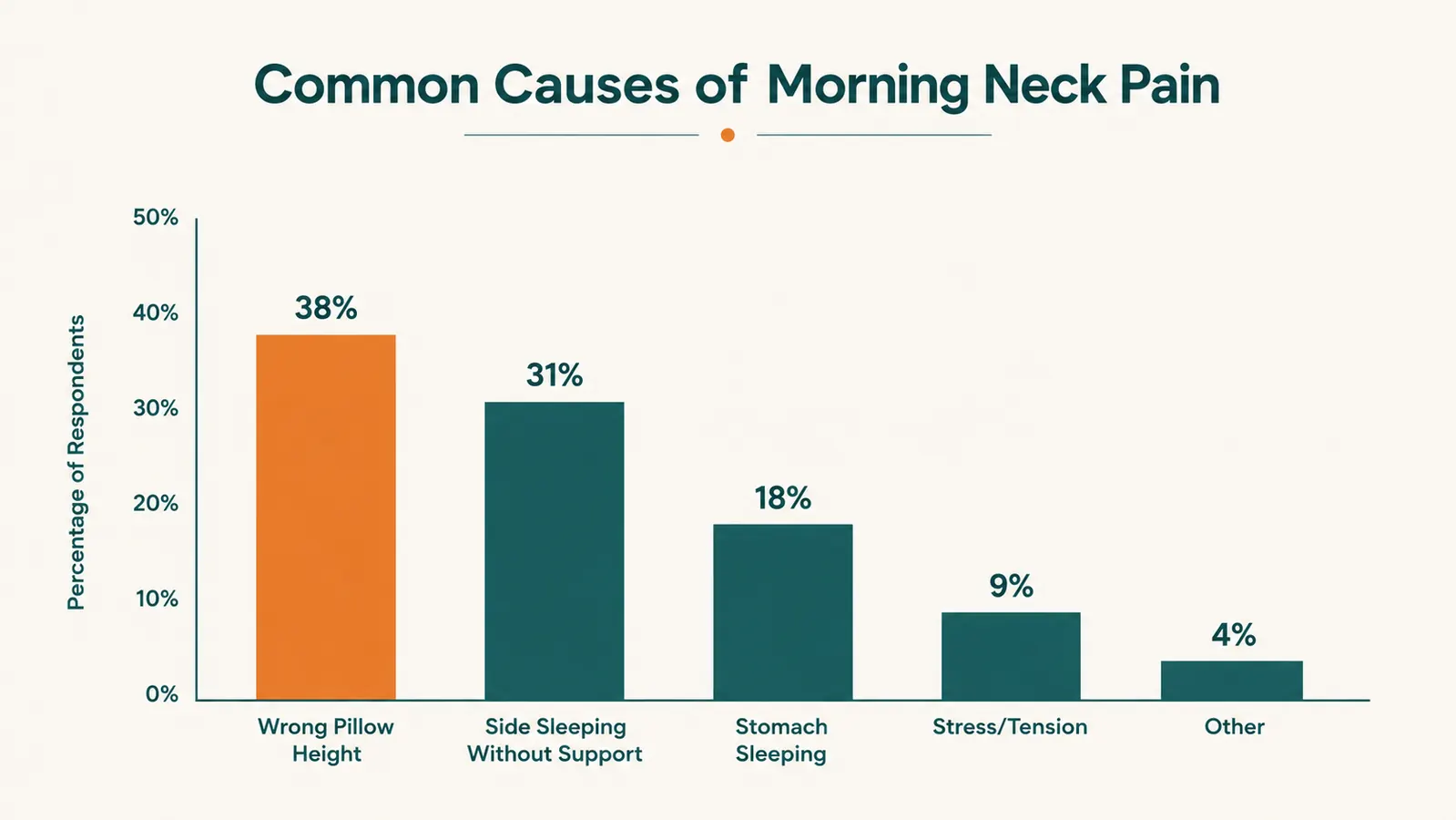
Step 4: Give Your Neck an Adjustment Period of Five to Seven Nights
Here is the part nobody tells you before you buy: the first two or three nights on a cervical pillow might feel unfamiliar. Not painful, just different. Your neck and upper back muscles have been working in a compensating pattern for however long you have been sleeping on the wrong pillow. When you take away that strain and replace it with actual support, those muscles have to relax and reset. That process takes a few nights, and during that time you might notice a slightly different kind of tiredness in your neck when you wake up. That is not the pillow making things worse. That is your muscles releasing.
I noticed this around night three. I almost went back to my old pillow. I am glad I did not. By night six, the morning stiffness that had been greeting me for years was noticeably lighter. By the end of the second week, I was waking up and immediately thinking about coffee instead of my neck. If you hit that unfamiliar feeling in the first few nights, stay with it. The adjustment window on a good cervical pillow is short. If things are still genuinely uncomfortable after ten nights, something about the height or position is probably off and is worth adjusting.
By night six, the morning stiffness that had been greeting me for years was noticeably lighter. By the end of the second week, I was waking up thinking about coffee instead of my neck.
Step 5: Build a Consistent Sleep Habit Around the New Pillow
A good pillow does most of the work, but a few simple habits will help it work better. The biggest one is getting to bed at a consistent time. When your sleep is fragmented or you are tossing and turning for a long time before you settle, you are moving your head around on the pillow more and losing the benefit of that supported position. I started going to bed around the same time every night, even on weekends, and it made a real difference in how rested my neck felt in the morning.
The second habit is checking your screen setup if you use a phone or tablet before bed. Looking down at a screen for thirty to sixty minutes before you try to sleep puts your neck in the exact flexed-forward position you are trying to recover from. I moved my tablet to a stand so I could read it at eye level, and that alone reduced the tension I was carrying into sleep. A few gentle neck rolls before lying down, nothing dramatic, just slow rotations left and right, also help release the tension built up during the day before your head hits the pillow.

What Else Helps Beyond the Pillow
The cervical pillow will do most of the heavy lifting if morning neck pain is your main complaint. But I want to mention a few things that worked alongside it for me. First, the cooling function on the Cozyplayer is genuinely useful if you tend to sleep warm. The pillow cover is designed to stay cooler than standard memory foam, which matters because heat makes you shift and turn during the night, which moves your neck off the supported position. If you are overheating consistently, pairing the cervical pillow with a cooling mattress topper is worth considering as a next step.
Second, hydration the night before matters more than I expected. I used to go to bed slightly dehydrated after evenings of coffee and then wine, and I noticed my neck and shoulder muscles were tighter and more prone to stiffness on those mornings. Drinking a glass of water before bed, as simple as that sounds, became part of my sleep routine and it helped. Third, if you are a stomach sleeper, no pillow will fully solve your neck problem because that sleep position puts a ninety-degree rotation on your spine for hours at a time. Transitioning to side or back sleeping while using a cervical pillow gives you the full benefit of the support. It takes a few weeks to shift a sleeping position, but it is worth trying.
If you want a deeper look at how the Cozyplayer held up over three months of nightly use, I covered all of that in my full long-term review, including the details on how the foam held its shape and what I would do differently if I were buying again. There is also a piece going through ten specific reasons why the contour design works for people who wake up stiff, which gives more of the physical explanation behind why this shape of pillow helps where a standard one does not.
If you want to wake up without neck pain, this is the one change I would make first.
The Cozyplayer Adjustable Cervical Pillow is available on Amazon right now with two loft inserts included so you can customize the height from night one. More than 16,000 people have reviewed it. It is a genuine fix for a common problem, and at the current price, it is worth trying before anything more complicated.
Amazon Check Today's Price on Amazon →