
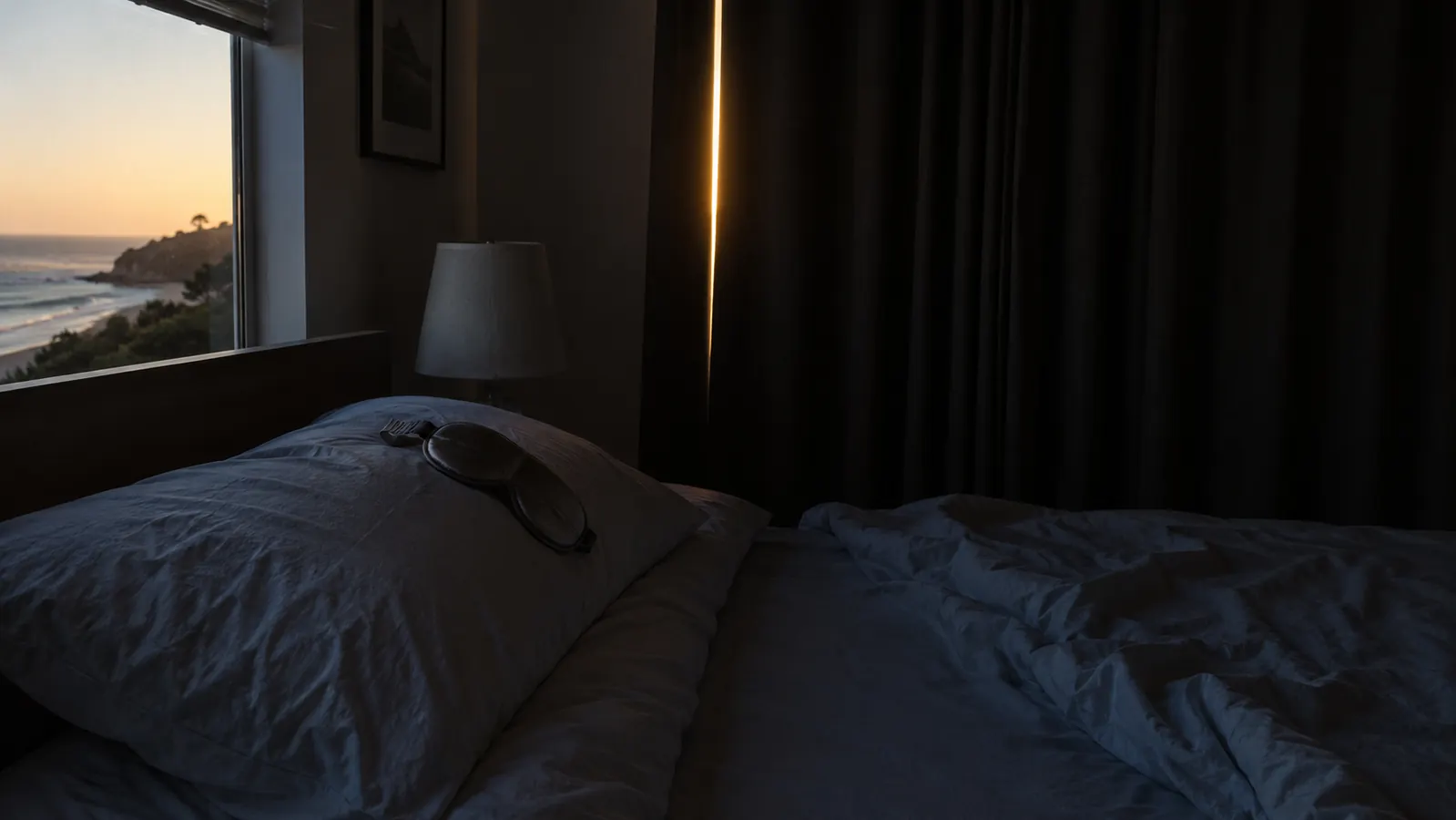
I live about four blocks from the ocean, and for most of my working life that location was a blessing. Quiet street, salt air, early morning light coming through the windows. What I did not appreciate until I retired was that same early light waking me at five in the morning, sometimes earlier in June when the sun barely takes a break. I tried heavy curtains. I tried an old-fashioned flat sleep mask that bunched up and pressed against my eyelids all night. I tried taping a blanket over the rod. None of it was a real solution until I put together a proper light-blocking routine, and the last piece that made everything click was a 3D contoured blackout mask from LKY DIGITAL.
Light disrupts sleep in ways that most people underestimate. Even small amounts of light filtered through closed eyelids signal the brain to suppress melatonin, the hormone that keeps you asleep. That is not a theory I read once on the internet; it is something I felt the first night I genuinely blocked all the light in my room and slept until seven without waking. This guide walks through every step I took, in the order that made the most difference.
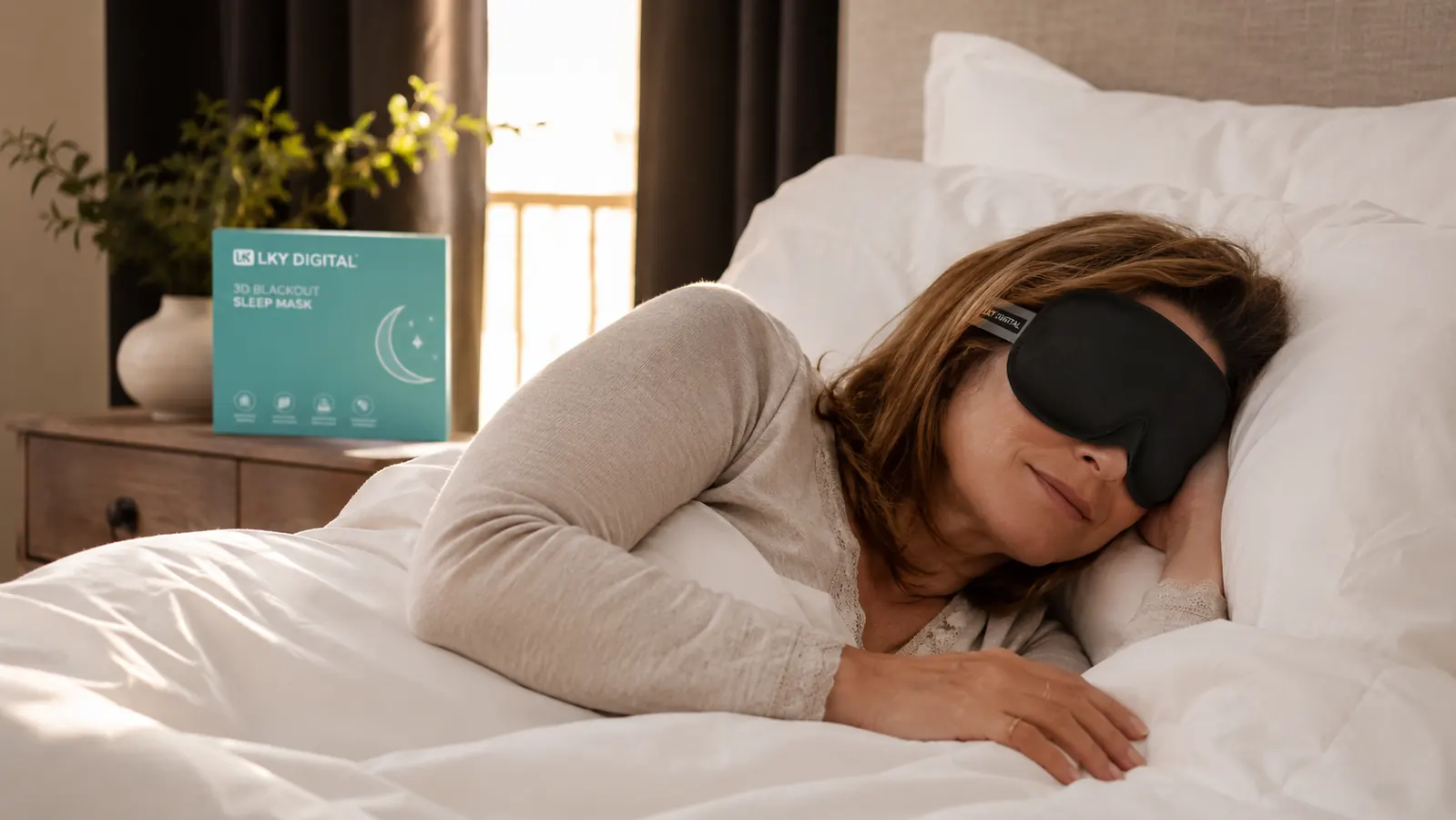
If your bedroom lets light in no matter what you try, a 3D blackout mask is the fastest fix.
The LKY DIGITAL 3D sleep mask has raised contoured cups that keep fabric off your eyes and block light even for side sleepers. Over 70,000 Amazon reviews. Comes in a 3-pack so you always have a clean one ready.
Amazon Check Today's Price on Amazon →Step 1: Map Every Light Source in Your Bedroom Before You Fix Anything
The mistake most people make is jumping straight to curtains without standing in their room at 2 AM with their eyes adjusted to the dark. I did exactly that one night when I could not sleep, and I was surprised by what I found: the gap at the bottom of my door was letting in a pale yellow bar of light from the hallway nightlight my husband uses. My alarm clock display was a surprising blaze of red. A router I had moved to the bedroom had a pulsing blue standby light. And the window curtains, which looked fine during the day, had a gap right in the middle where the panels met.
Before you buy anything, spend five minutes in a dark room letting your eyes adjust, then look for every glow, bar, and stripe. Write them down. You will address each one in the steps below, and knowing the full list ahead of time keeps you from solving three sources and wondering why you are still waking up early.
Step 2: Handle Your Windows First, Because They Are the Biggest Source
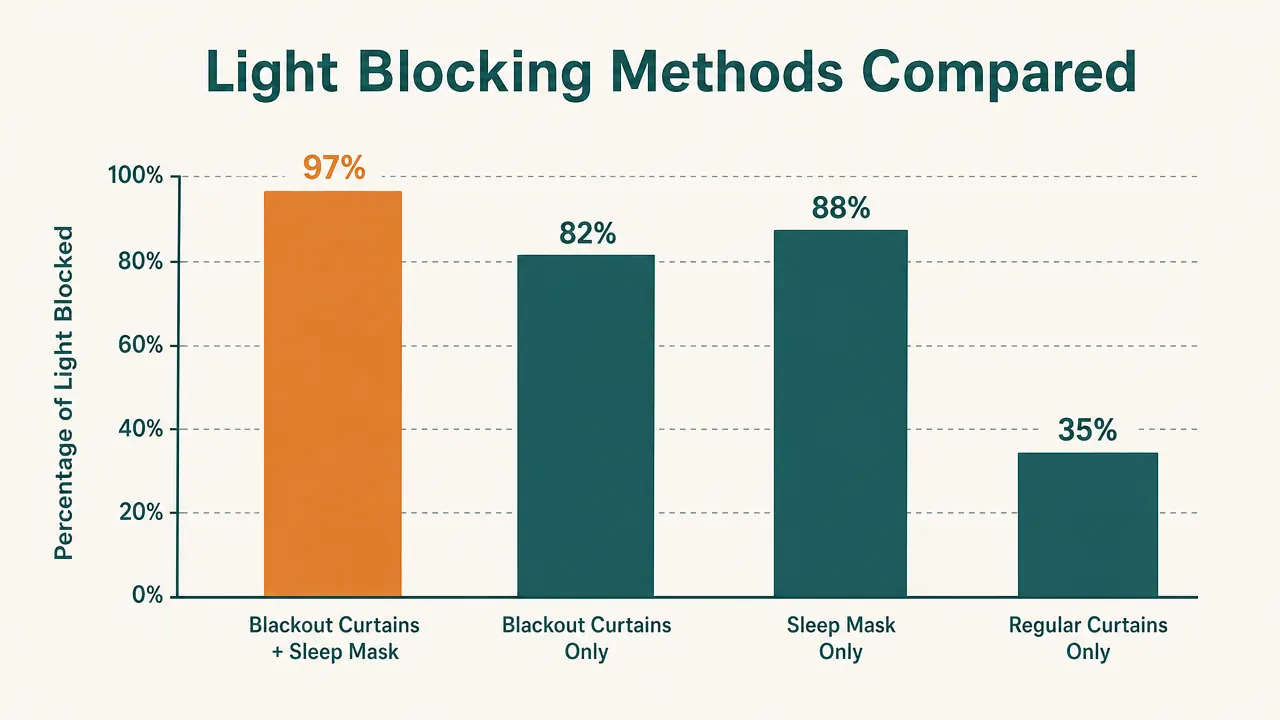
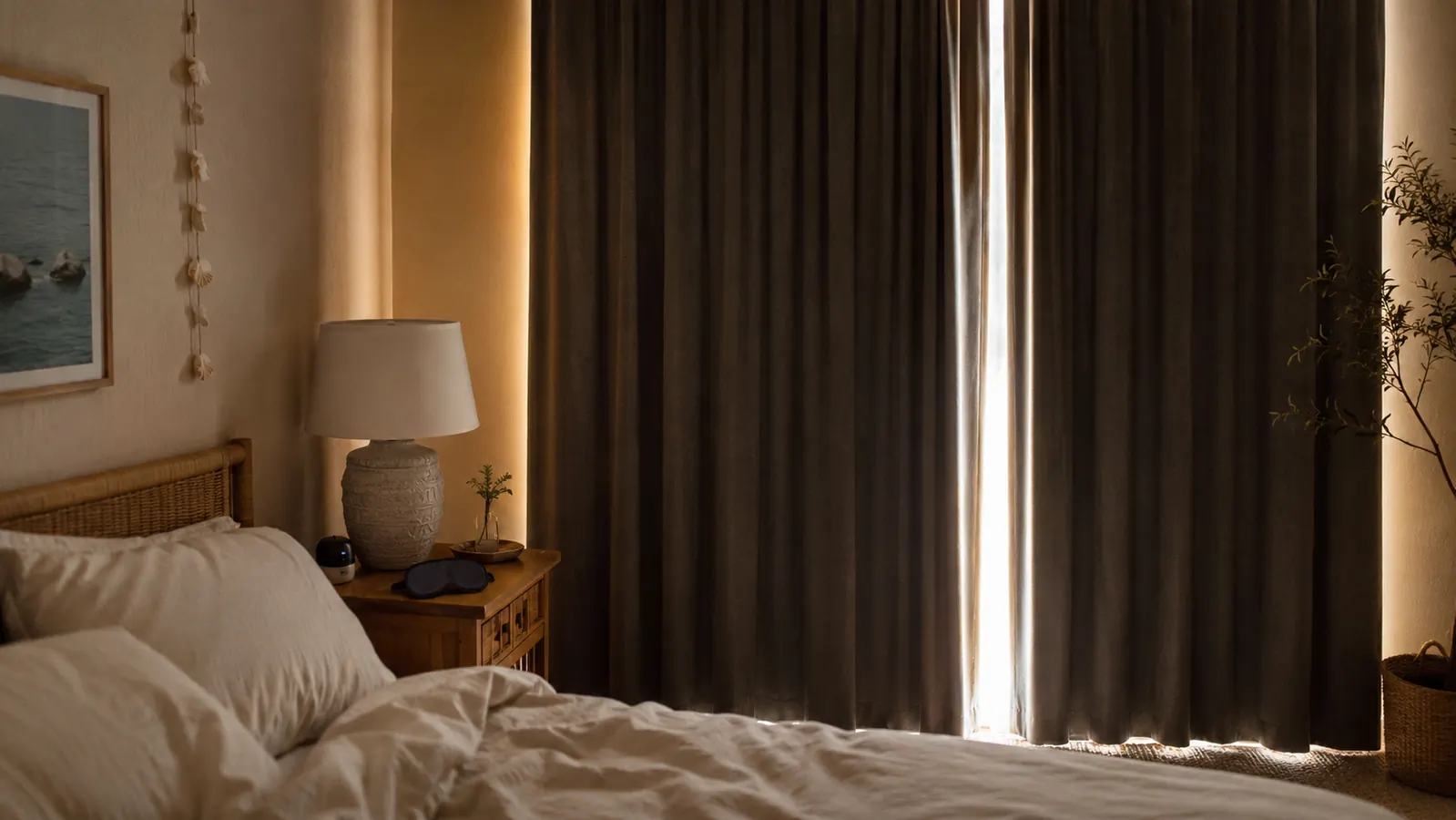
Windows are almost always the loudest light source, especially for anyone who wakes with the sunrise. There are two ways to address them: blackout curtains with side channels, or blackout window film. I went the curtain route because I wanted to be able to open the room during the day without effort. The key detail most people miss is coverage beyond the glass. Standard curtains cover the glass but leave two inches of wall exposed on either side and a gap where the panels meet in the middle. You need curtains that are wider than the window by at least four inches per side and that overlap generously in the center.
I used tension rods with side-channel blackout panels in my bedroom, and they made a noticeable difference in how dark the room stayed until about 7 AM during summer. But they did not get me to full blackout. Morning sun is direct and persistent, and even a good blackout curtain lets a faint glow seep around the edges. That is where the sleep mask becomes indispensable rather than optional.
Step 3: Kill the Small Lights You Have Been Ignoring
That alarm clock display. The router. The smoke detector LED. The standby light on the television. These feel trivial but they add up, and more importantly, a blinking or pulsing light is particularly good at disrupting sleep because the brain's visual system responds to change rather than just brightness. My first fix was a strip of black electrical tape over the router's LED and the clock display. I replaced the smoke detector in the bedroom with one that only blinks every forty seconds rather than every eight. I moved the television's standby light out of my sightline by angling the set.
The door gap is easy: a door sweep or a rolled towel along the bottom seam stops the hallway light bar cold. If you have a partner who uses a bathroom light at night, this one change can make a real difference without requiring them to navigate in complete darkness.
The night I finally addressed every light source in the room, I slept past seven for the first time in years. My bedroom had been leaking light in five places I had never noticed.
Step 4: Address Screen Light Before Bed, Not Just in the Bedroom
Blue light from phones, tablets, and televisions delays melatonin production for up to ninety minutes after exposure. That means if you are watching something on your tablet in bed until ten-thirty, your brain's sleep chemistry is still waking up when you want to be falling asleep. I started using the Night Shift setting on my phone after eight in the evening, which shifts the screen toward warmer tones and reduces blue light output. I also moved my main reading to an e-reader with a warm light setting rather than a backlit tablet.
This step is the one people resist most because it asks you to change a habit rather than buy something. But I noticed the difference within a week: I was falling asleep faster, and I was not lying in bed for thirty minutes feeling wired despite being tired. The curtains and the mask keep light out while you sleep. Managing screen light before bed helps you actually get to sleep in the first place.
Step 5: Choose and Fit a 3D Blackout Sleep Mask That Works for Side Sleepers
This is the step that ties the whole system together, and it is worth spending a few minutes on rather than grabbing whatever shows up first in a search. I tried three masks before I settled on the LKY DIGITAL 3D model, and the difference between a flat mask and a contoured one is substantial. A flat mask presses the fabric directly against your eyelids. For me that created pressure that woke me up when I rolled to my side, and it also caused my eyelashes to catch on the fabric and drag slightly every time I moved. Not comfortable.
The 3D design has raised dome cups that arch over each eye, leaving a small chamber of air between the mask and your lash line. You can blink freely. You can open your eyes inside the mask without the fabric touching them. And critically for side sleeping, the rigid cups hold their shape against the pillow rather than collapsing flat and pressing into your eye socket. The elastic band on the LKY DIGITAL model is wide enough to not bite into the back of your head and adjustable enough to fit comfortably without having to be cinched tight. I wear mine on the looser end of the adjustment and it stays in place through the night.
Fit matters more than most people expect. Put the mask on in a lit room and see where the light leaks. For most people it leaks at the nose bridge. The LKY DIGITAL mask has a nose cutout with a flexible foam insert that conforms to the bridge and eliminates that gap. Run your finger along the bottom edge and the sides while wearing it to feel for gaps. If you find one, adjust the headband tension slightly lower on the skull, which tends to angle the nose piece more flush against your face.
What Else Helps After You Have the Light Handled
Once your bedroom is genuinely dark, you may find that noise becomes the next thing keeping you awake. I noticed this after about two weeks of using the mask consistently: the room was dark, I was falling asleep more easily, but I was still waking at odd hours from sounds. A neighbor leaving for work at five-thirty. A car alarm two blocks over. I added a sound machine to the nightstand, and that handled it. There is a separate guide on the sound machine setup on this site, but the short version is: place it between you and the door, set it to a volume just loud enough to mask the specific sounds that wake you, and use a continuous fan or brown noise rather than a looping nature track.
Temperature is the other factor worth mentioning. A dark, quiet room does not help much if you are too warm. The body needs to drop its core temperature slightly to stay in deep sleep, and a room that is too warm fights that process. I keep my bedroom around 67 degrees at night. If that is not possible through your thermostat, a cooling mattress topper can make a meaningful difference in how often you wake up overheated.
All five steps work. But the mask is the one you can put in place tonight.
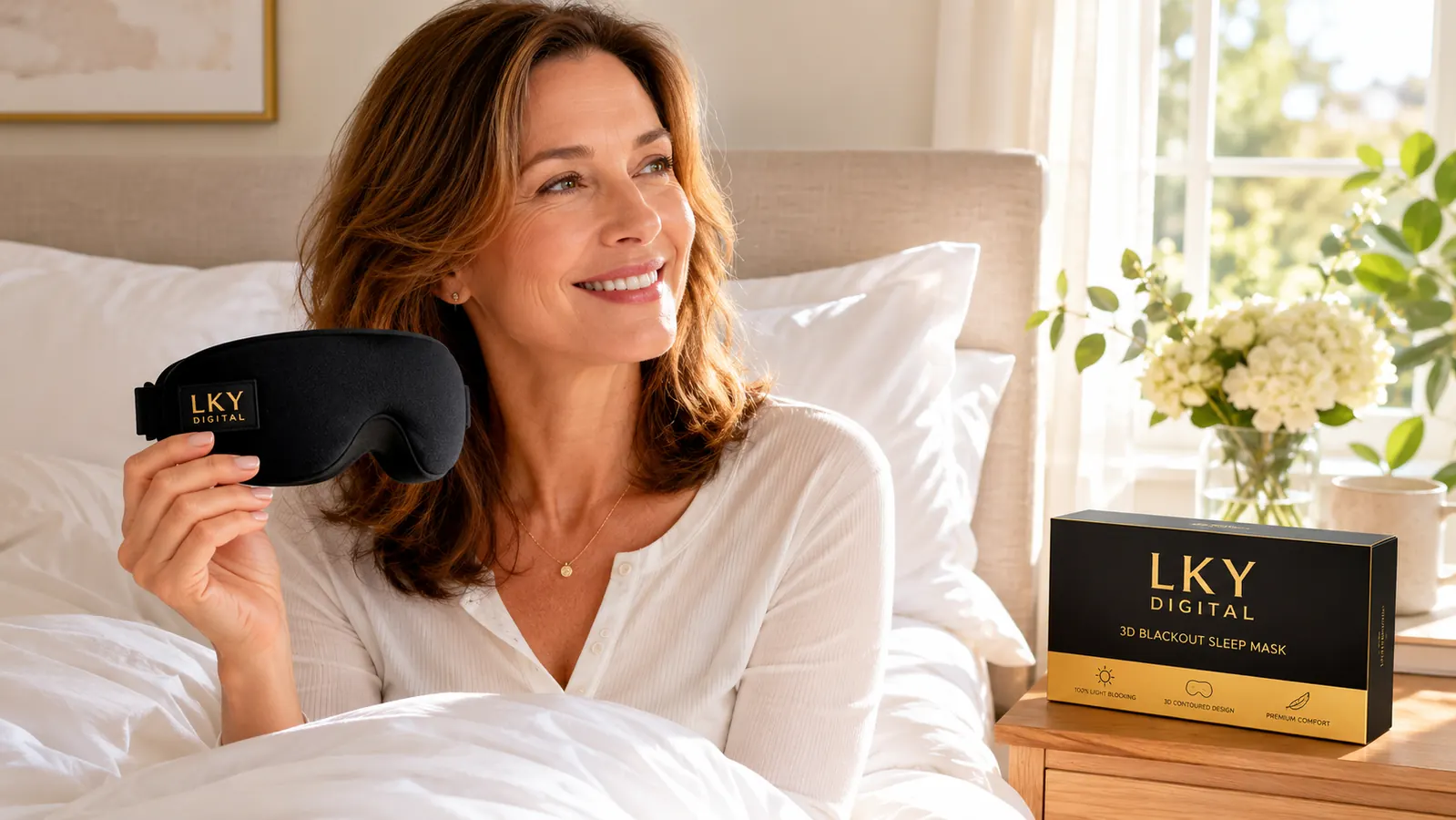
The LKY DIGITAL 3D blackout sleep mask comes as a 3-pack so you always have a fresh one on hand. Raised dome cups keep pressure off your eyes, the nose seal blocks even sunrise light, and the wide elastic band sits comfortably all night on any sleep position. Rated 4.6 stars from more than 70,000 reviews on Amazon.
Amazon Check Today's Price on Amazon →