

My bedroom faces east. It sits about four blocks from the water, and in the spring and summer the sunrise comes in fast and bright, reflecting off the white walls before I am anywhere close to ready to be awake. I have tried blackout curtains. I have tried rearranging the furniture. I have slept with a pillow over my face, which works exactly as well as it sounds. For years I thought this was just my lot in retirement. Then I tried the LKY DIGITAL 3D blackout sleep mask, and two months later I am still wearing it every night.
I should say upfront that I was a skeptic. I have used flat sleep masks before, the kind that press flat against your eyelids, and they never worked for me. The pressure on my eyes felt wrong, I would blink and the fabric would drag, and by 4 AM the elastic would have migrated up my forehead. I bought the LKY DIGITAL mask in early May mostly because the contoured dome design looked different from anything I had tried before. At the price point, I figured I had little to lose.
The Quick Verdict
Total blackout for side sleepers, no eye pressure, stays put all night. The elastic is not the softest I have felt, but it stops being noticeable after a week.
Amazon Check Today's Price →Coastal sunrise stealing your sleep? This is what stopped mine.
The LKY DIGITAL 3D sleep mask has over 70,000 reviews on Amazon and is budget-priced. After two months of nightly wear, I understand why it has that following.
Amazon Check Today's Price on Amazon →How I Have Used It
I wore this mask every single night from the first week of May through the end of June. That is about sixty nights of continuous use, which I think is long enough to give an honest picture. I am a side sleeper and a light sleeper. I tend to fall asleep between 10 and 10:30, then wake at some point between 4:30 and 5:30 when the light starts to shift. My bedroom has no overhead blackout treatment, just light curtains I bought for aesthetics rather than light control.
During those two months I wore the mask straight through the night on most evenings. On a handful of warmer nights I took it off around 2 AM because the material felt warm against my face. I also wore it for a few afternoon rest sessions after long morning walks with my dog, Biscuit, which is useful context because afternoon light is harsher and more direct than early-morning light.
I did not change anything else about my sleep environment during this period. Same pillow, same bedding, same light curtains. Whatever changed in my sleep experience I am attributing to the mask.
The Design: What Makes the 3D Dome Different
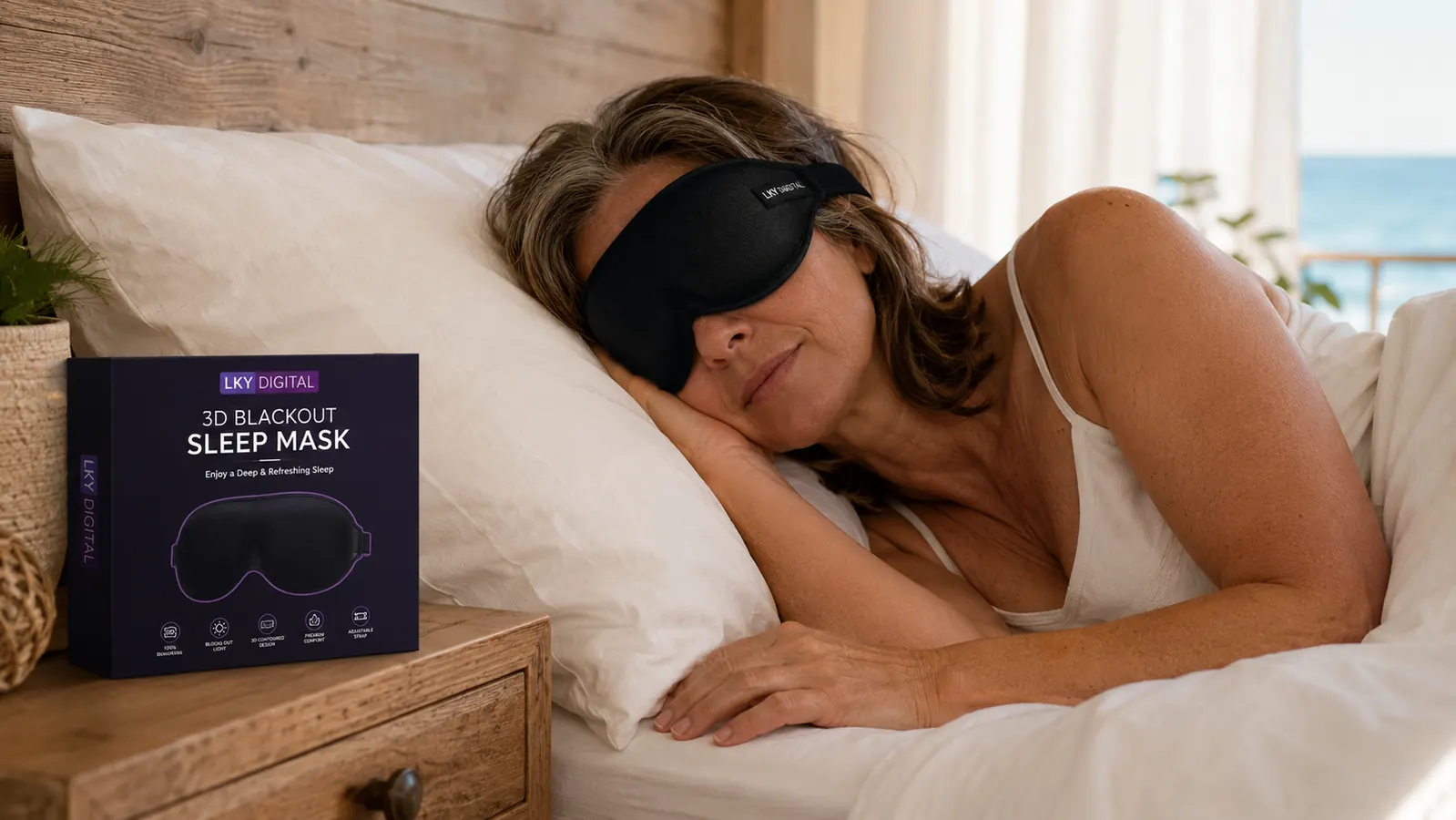
The single feature that separates this mask from every flat sleep mask I have owned is the raised dome over each eye. The cups sit away from your eyelids so there is no pressure anywhere on the eye surface itself. When you blink, you blink into open air. When you move your eyes under closed lids, as we all do during dream sleep, there is nothing pulling or dragging. This sounds like a small thing until you have worn a flat mask for years and realized how much that constant contact was bothering you.
The dome is made from a lightweight molded material with a velvet-feel inner surface. It sits against the bridge of your nose and the top of your cheekbones, not your eye sockets. The seal around the perimeter is what blocks light, and it is surprisingly thorough. I tested it by putting the mask on, laying down, and having my neighbor shine a flashlight at my face from close range. I could not detect a point of light. That is a higher bar than my bedroom requires, but it was reassuring.
The elastic band is adjustable with a simple slide fastener at the back. I set mine once and have not touched it. My head is on the smaller side and I found a comfortable position without any trial. The band sits at the back of the skull rather than the crown of the head, which matters if you move around at night.
Side-Sleeper Fit Over Two Months
This is where I expected the mask to fail. Every flat mask I have tried eventually slides off or rides up when I switch from my back to my side. The dome design worried me even more because the cups protrude from my face, and I sleep on both sides and rotate throughout the night.
In practice, the mask stays on far better than I expected. On my side, the dome presses gently against the pillow but does not compress enough to push the mask off my face or cave the cup into my eye. I think the band position at the back of the head, rather than higher up, is what keeps it anchored. Most nights I wake up with the mask still in place. On the nights when it has shifted, it has slid down my nose rather than coming off entirely, which is a small problem to fix.
One genuine side-sleeper issue: on my right side, which is the side I prefer, the corner of the dome occasionally catches on my pillow cover if I have been moving around. It is not enough to pull the mask off, but I notice a faint resistance. Switching to a satin pillowcase eliminated this almost entirely. That is a small extra step, but it is worth knowing.
After two months of nightly wear, I understand why this mask has seventy thousand reviews. The darkness is real, the fit holds, and the pressure on my eyes is exactly zero.
Light Blocking: What I Actually Experienced
In my first week with the mask I slept until 6:15 four out of seven mornings. Before the mask, sleeping past 5:30 was unusual for me and sleeping past 6 felt like a miracle. By week three I was consistently waking between 6 and 6:30, which is when I actually want to wake up. My alarm goes off at 6:45. For the first time in years, it is actually doing its job.
The mask blocks light along three edges cleanly: top of the nose bridge, temples, and forehead. The nose area is the one gap that flat masks always leak through, and the dome design solves it by sealing along the edge of the cup rather than the flat plane of the mask. I noticed zero light bleed on the nose side when lying on my back. When I am on my side, the edge near my nose occasionally lifts very slightly from pillow pressure, but the amount of light that gets in is negligible. It has never woken me.
Comfort Over the Long Haul
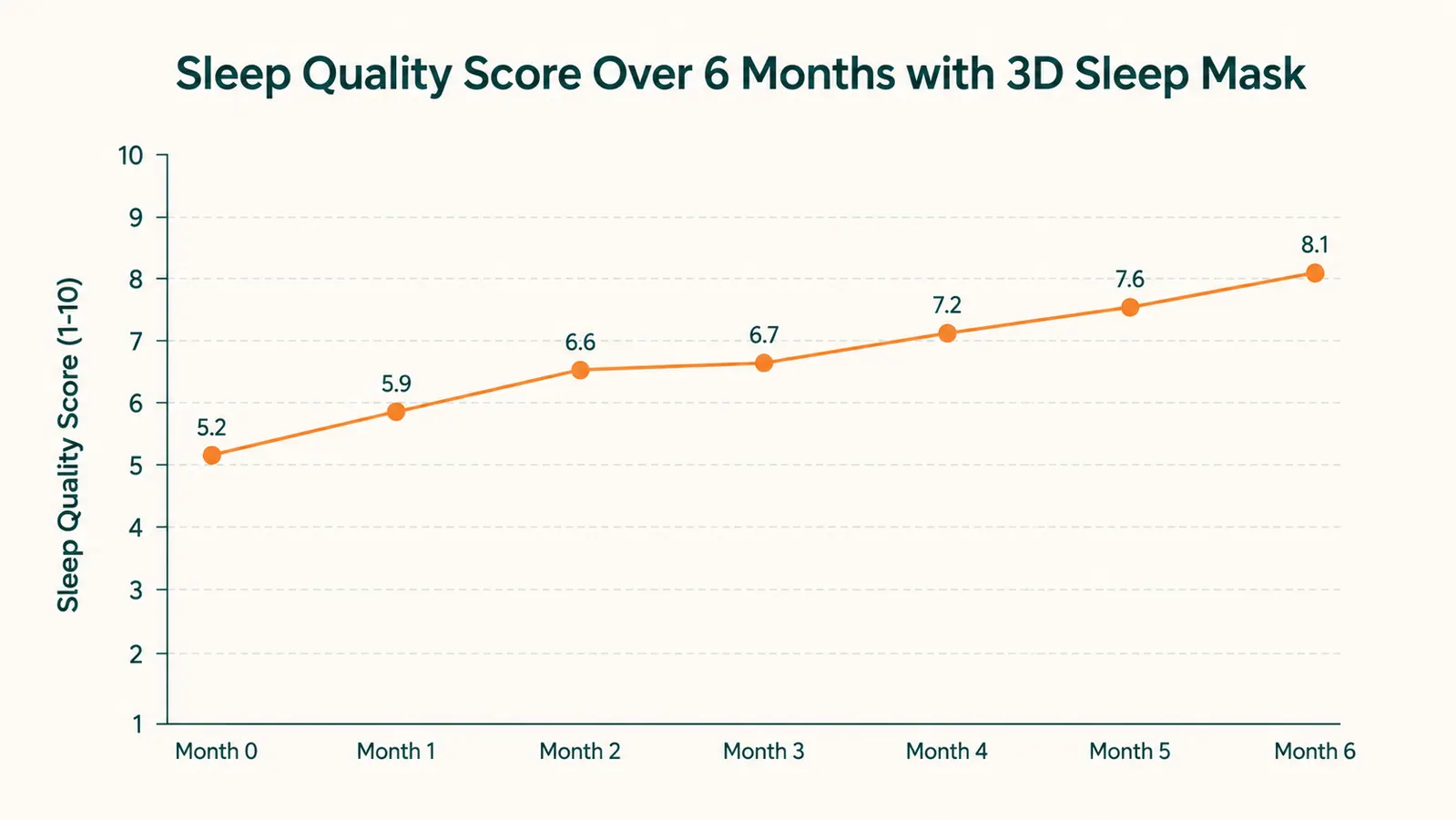
The first three or four nights, the elastic band left a faint red line across the back of my head in the morning, the kind you get from any headband. This faded by week two as my skin adjusted. By week three I was putting the mask on without thinking about it, the same way you stop noticing a watch after a few days. That level of passive comfort is what I was hoping for and it took about ten to twelve nights to get there.
The velvet inner surface stays soft over time. I hand-wash mine in cool water with a small drop of dish soap every week, reshape it, and lay it flat to dry. It takes about twenty minutes to dry fully. The dome has held its shape across sixty washes. The elastic has not frayed or lost tension. For the price, the durability surprised me.
On warm nights, the interior of the dome traps a small amount of heat near your eyes. This is not something I noticed during cooler nights, but in late June with my window open and the air coming off the water, I would sometimes feel warm around the eye area after about four hours. I resolved this by cracking the dome slightly away from my face as I fell asleep, then letting it settle into position. Not elegant, but it worked. People who run warm or who sleep with a lot of blankets may find this more of an issue than I did.
What I Liked
- Completely eliminates pressure on the eyes and eyelids
- Blocks coastal sunrise light without any supplemental treatment
- Stays in place through the night for most side sleepers
- Adjustable elastic, easy to set once and forget
- Holds up well to weekly gentle washing
- Light enough to forget it is there after the first week
Where It Falls Short
- Dome can catch slightly on cotton pillowcases when switching sides
- Interior traps a little warmth on hot nights
- Elastic band leaves a mild line on skin for the first week or two
- The nose-bridge seal can lift very slightly under heavy side-sleeping pillow pressure
Alternatives I Considered
Before buying the LKY DIGITAL mask I looked at the Manta Sleep Mask, which is the most frequently recommended 3D mask in the sleep-accessories community. The Manta costs significantly more and uses an adjustable cup system that appeals to people with specific face shapes. I did not buy it because I wanted to start at a lower price point to confirm the dome concept worked for me before investing more. After two months with this mask, I am not sure I need to upgrade. The Manta may be better for sleepers with very wide or narrow eye spacing, but for a standard fit it would be hard to justify the difference.
I also tried a basic foam flat mask from a travel kit I had in a drawer. That comparison is almost unfair. The flat mask pressed my lashes, slid off my face by 3 AM every night, and left a pressure headache behind my eye sockets on two consecutive mornings. The dome design is not a minor upgrade from a flat mask. It is a different category of product.
Who This Is For
This mask is a natural fit for anyone whose bedroom gets early or unpredictable light and who has given up on blackout curtains, either because of cost, renter restrictions, or aesthetics. It is well suited to side sleepers who have found flat masks uncomfortable or who have lost masks in the night. It is also a strong choice for light sleepers who are sensitive to eye pressure, the kind of people who notice when they have been sleeping on their arm and feel it in their eyes the next day. If you travel and need something compact and effective, the dome flattens reasonably well into a carry-on and the price makes it very low-stakes to pack.
Who Should Skip It
If you are a stomach sleeper, the dome will press directly into the mattress and collapse, which defeats the purpose entirely. Flat masks or no mask are better options for you. If you run very warm at night and are already fighting heat issues, the slight warmth trap inside the dome may compound a problem you are already managing. And if you have a very narrow nose bridge or deeply set eyes, the seal geometry may not work as well for your face shape. In those cases the adjustable-cup designs at higher price points may be worth trying.
Two months in, I reach for this mask without thinking. That is the best review I can give it.
The LKY DIGITAL 3D sleep mask costs less than a decent cup of coffee and holds up to daily use for months. If early light is waking you up before you are ready, this is the most direct fix I have found.
Amazon Check Today's Price on Amazon →