
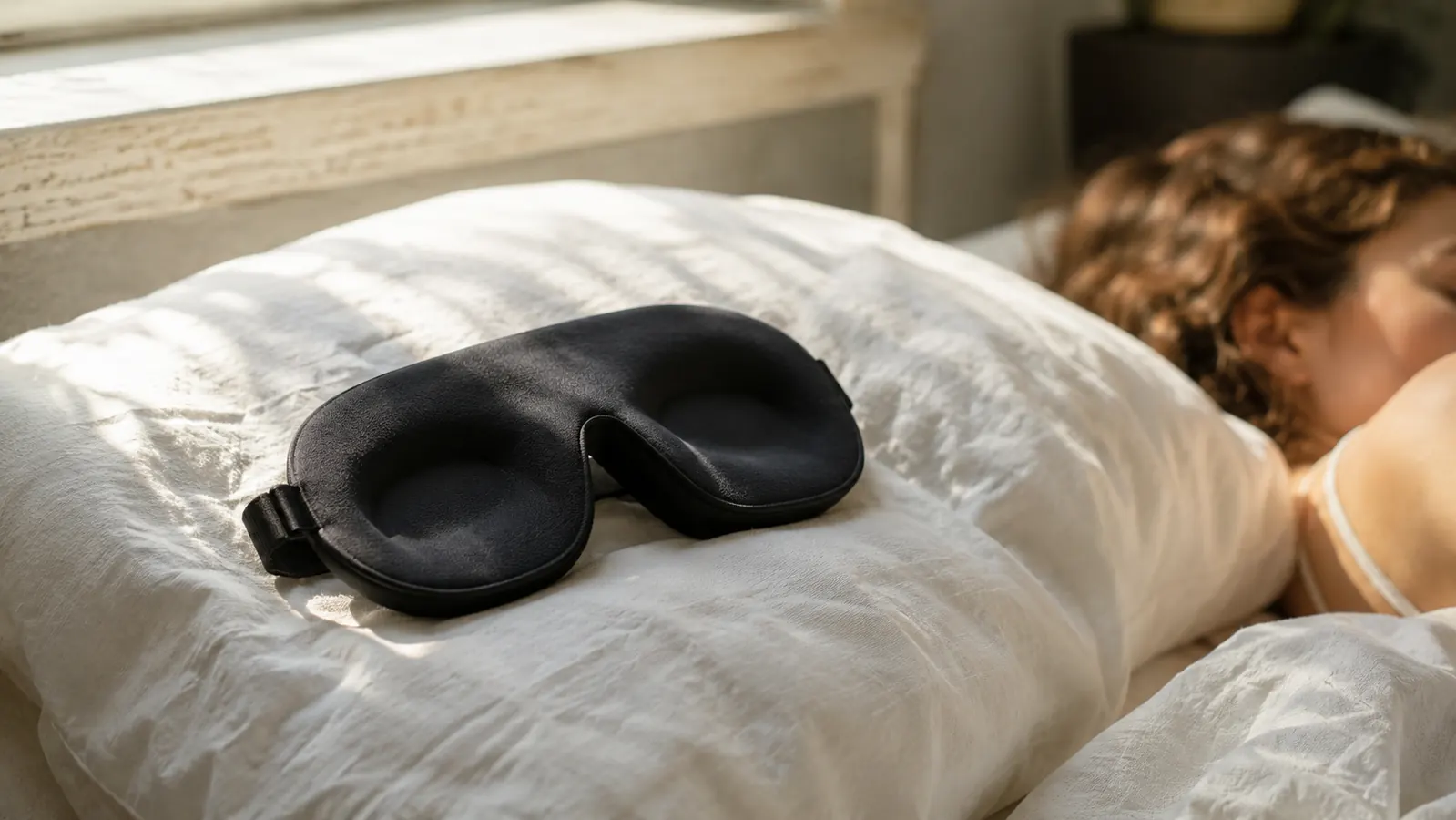
Nobody warned me about the strap. That is the part nobody seems to mention in the glowing five-star write-ups. I picked up the LKY DIGITAL 3D blackout sleep mask because I had read enough reviews praising the contoured cups, and I figured at this price point, even if it was a disappointment, the loss was manageable. What followed was about three weeks of genuine frustration before something shifted. I want to tell you the full story, because if you are a side sleeper with long hair and a small-to-medium face, you need to know what you are actually signing up for before you click Add to Cart.
I am Margie. I live near the coast, I retired from years of cooking and painting, and I walk my dog on the beach most mornings around six. I have been testing sleep gear for this site for the better part of a year now, and I try to be honest about what works and what does not. The LKY DIGITAL 3D mask has been on my face or on my nightstand almost every night for roughly ten weeks. Here is my unfiltered take.
The Quick Verdict
A genuinely pressure-free blackout mask with a real design flaw that side sleepers and people with long hair should know about before buying. Once you dial in the fit, it earns its place.
Amazon Check Today's Price →Still losing sleep to light leaking in from the sides? The cup design addresses that differently than any flat mask I've tried.
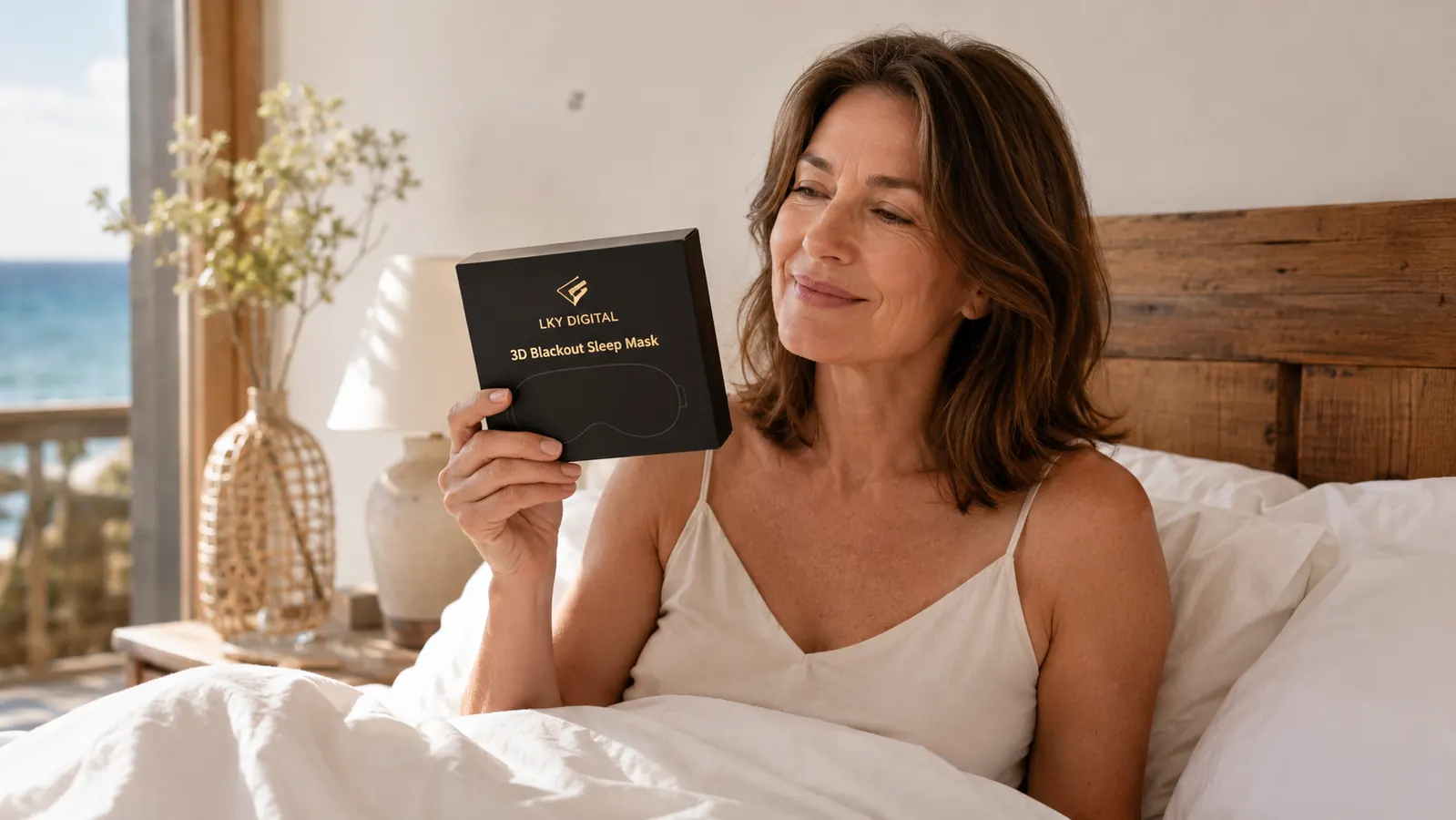
The LKY DIGITAL 3D mask comes as a 3-pack, which means you can keep one on the nightstand, one by the travel bag, and one in the wash. Check the current price on Amazon before you decide.
Amazon Check Today's Price on Amazon →What the Cup Design Actually Does (and What It Does Not)
The selling point of a 3D sleep mask is the molded cavity over each eye. Instead of a flat piece of fabric pressing down on your eyelids and lashes, there are two raised plastic-framed shells that sit like little tents over your eyes. When you wear it correctly, your eyelashes touch nothing. Your eyes can actually blink freely under there while you drift off. For anyone who has ever felt that dull, dragging pressure of a standard flat mask, this is a real improvement.
I tested the cups by putting the mask on and then gently pressing against the outside of each shell. There was genuine space between the shell interior and my lash line. Blinking felt normal. I could open my eyes inside the mask and not feel fabric against them. That part of the claim holds up. The cups on the LKY DIGITAL version are firm but not rigid, and the memory foam face seal around the perimeter of each cup is soft enough that it did not leave pressure marks on my cheekbones or nose bridge the way a harder foam would.
What the cups do not do, and what nobody in the five-star reviews seems to say plainly, is maintain perfect eye alignment when you roll onto your side. When I am sleeping on my back, this mask fits beautifully. When I shift to my right side, the cup structure rotates slightly with gravity and the right cup often ends up sitting partly on the outer corner of my eye socket rather than fully over it. It is not painful. But it does let in a thin sliver of light at the nose bridge, and that is precisely the gap that woke me up on three or four early mornings before I figured out how to compensate.
The Strap Problem: What Nobody Tells You About Adjustability
The elastic strap on this mask is a single band that sits around the back of the head, with a small plastic adjuster to size it. For about the first ten nights, I could not get it right. Too loose and the mask slipped down during sleep, creating a light leak at the top. Too tight and I woke up with a faint headache and a red line across the back of my skull. The sweet spot exists, and I found it eventually, but it took longer than I expected.
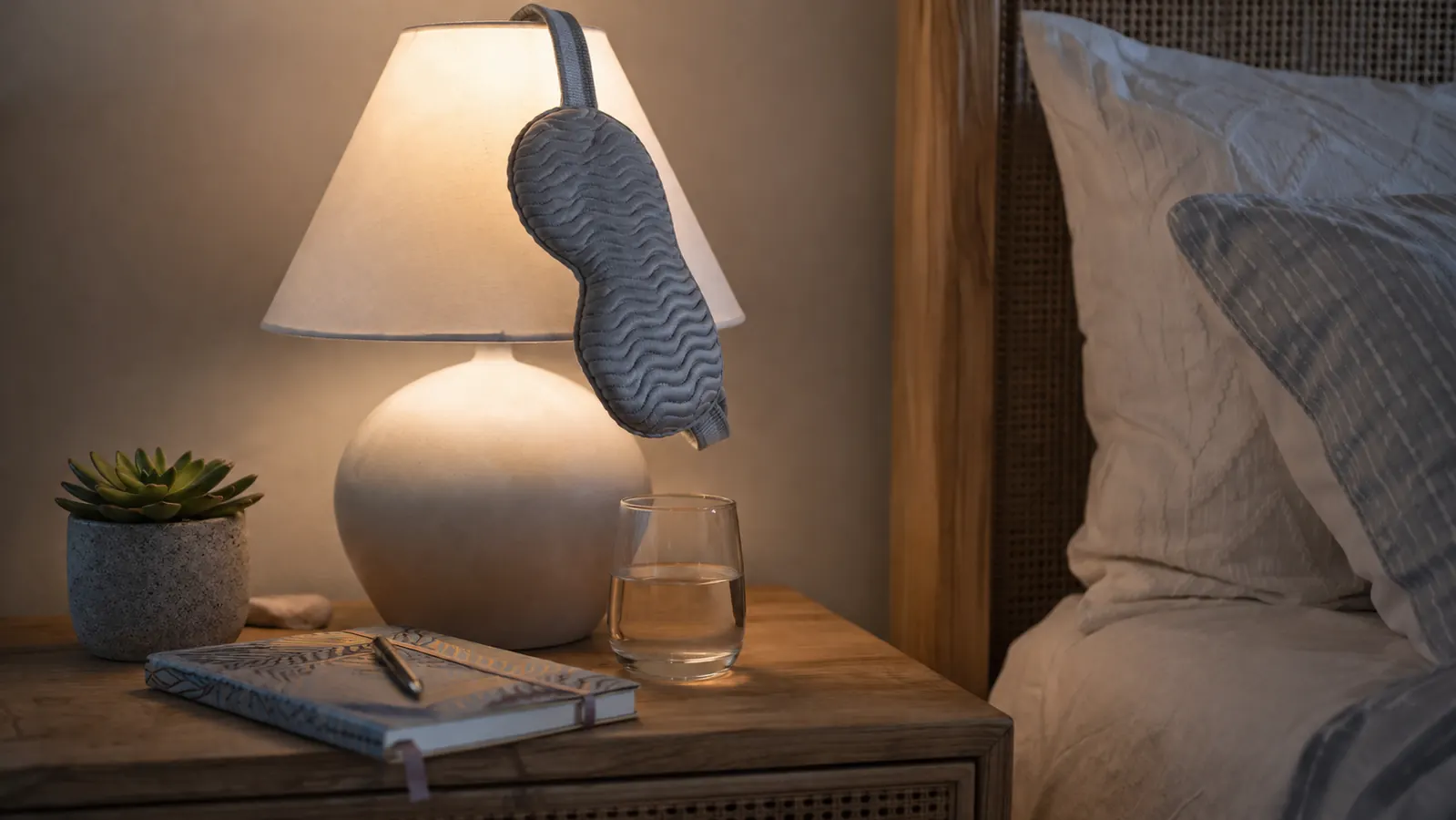
Here is the issue: the adjuster is fiddly in the dark. The little plastic piece does not click into position or snap audibly. You slide it and hope. I started adjusting it while sitting under a lamp before bed rather than trying to do it in a dark room, and that helped considerably. Once I found my correct setting, I left the strap alone and stopped readjusting. The mask now goes on in about three seconds with no fussing.
If you have long hair and wear it down at night, brace yourself. The strap snags. The first week I lost a small knot of hair at least twice to this mask, which is not ideal at any age. My solution was to pull my hair into a loose low bun before putting the mask on. That eliminated the problem entirely, but it is a step nobody mentions in the product listing. If you are someone who sleeps with hair down and does not want to change that habit, this mask will annoy you more than it helps you.
The cup design is genuinely better for your lashes and your eyelids. But that improvement comes with a side-sleeper tradeoff that took me a few weeks to work around.
The Nose Gap: A Real Issue and a Real Fix
Sleep masks have a fundamental geometry problem at the nose bridge. Your nose protrudes from your face, and the mask has to either accommodate that protrusion with a notch or press uncomfortably against it. The LKY DIGITAL mask handles this with a soft indented channel at the bottom of the mask where your nose sits. It works reasonably well when you are on your back and the mask is sitting level on your face.
When you are on your side, the mask tilts, and that nose channel ends up slightly off-center. On most nights this is a non-issue because the mask shifts with my face and the seal stays reasonable. But on about two out of every ten nights, I notice a faint glow from my phone charger or from the streetlight outside getting in from the bottom edge near my nose. It is enough to be distracting if I am in a very light stage of sleep.
The fix I found was to position the mask slightly higher on my face before going to sleep, so the foam sits more firmly against my cheekbones. When I do that, the nose gap almost disappears. It requires a minor position adjustment from where the mask instinctively wants to sit, but once I built it into my routine it became automatic.
Darkness Quality: Where It Actually Delivers
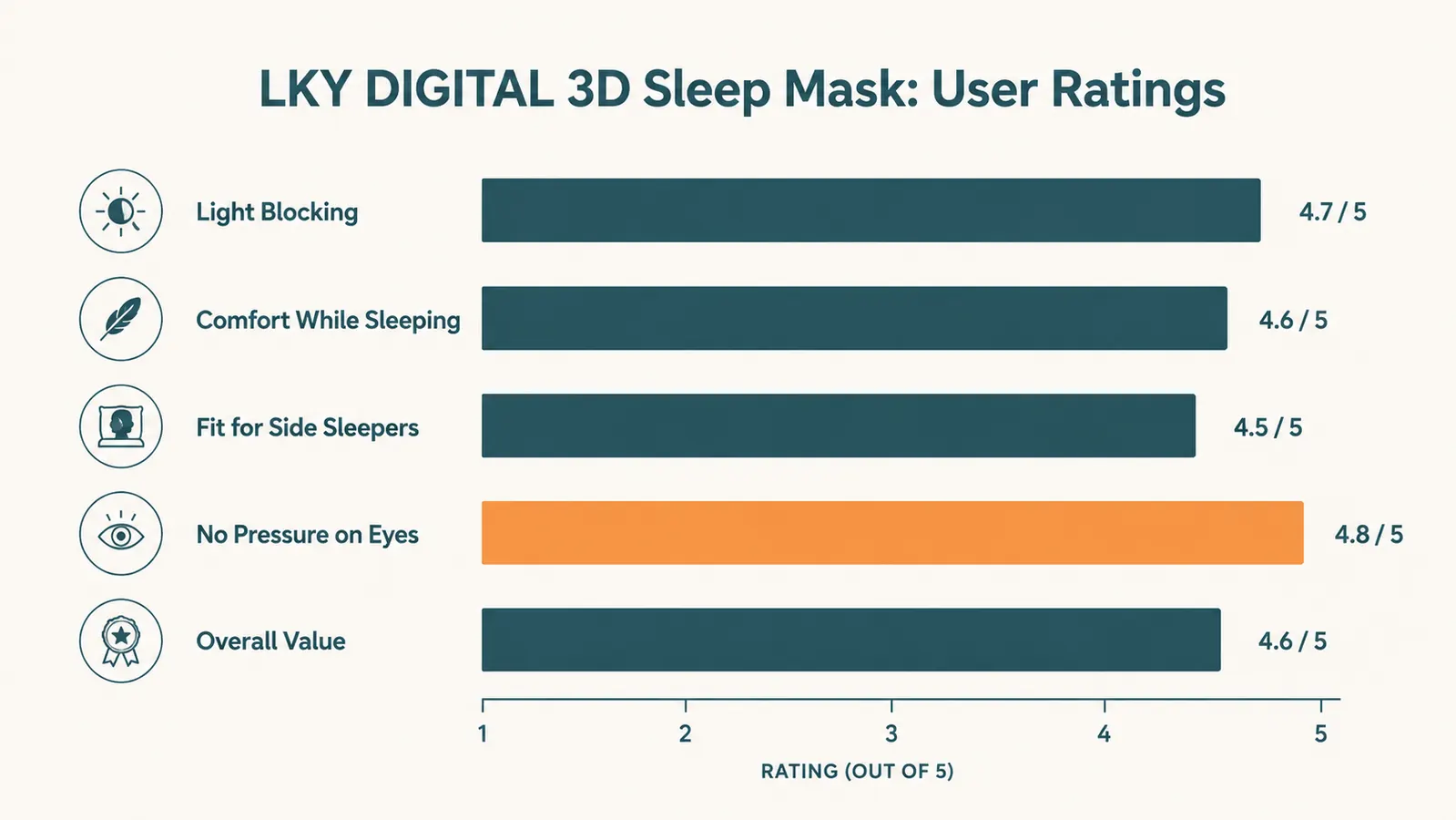
I should say clearly: once the fit is dialed in, this mask delivers real blackout conditions. We live close to the coast, which means our bedroom gets ambient light from the marina and from the neighbors who installed those motion-sensor floods that go off at midnight when a raccoon passes by. Before this mask, those lights would pull me out of deep sleep reliably. With the LKY DIGITAL mask fitted correctly, I cannot perceive any of those light sources. It is genuinely, properly dark.
The 3D cup structure contributes directly to this. Because the cups sit away from your eyes and the memory foam seal wraps around the entire perimeter of your face, there are fewer gaps for ambient light to sneak through than with a flat mask. A flat mask covers your eye area but the fabric itself can lift at the edges as you move. These cups act more like a physical barrier. The foam seal is thick enough that light does not transmit through the material itself, even with a bright light source close by.
I tested it one afternoon by sitting near my sunniest window and putting the mask on with the strap adjusted correctly. Full darkness. That is what you want from a blackout mask, and this one earns that label honestly. It comes as a 3-pack, which I appreciated because one is always clean, one is on my face, and the third lives in my overnight bag without me having to think about it.
Comfort Over a Full Night
The inner cup material is smooth and cool against the skin. The memory foam face seal does not feel scratchy or stiff. I can say with confidence that on the nights the mask stays in position, I wake up without any marks on my face and without the sticky, compressed feeling I used to get from thin flat masks. The cups mean there is no prolonged pressure on any one spot of your face, which I notice most around my eye sockets and across my nose. By morning, my face feels fine.
The weight of the mask is minimal. I barely feel it once I am falling asleep, which is the correct answer for a sleep accessory. There is enough structure to keep the cups in their shape, but not so much that it feels like wearing safety goggles. The elastic band, once adjusted to my head size, does not dig in or leave a pressure groove the way some elastics do. I have worn this mask for upwards of seven consecutive hours without any real discomfort.
What I Liked
- Genuine no-pressure eye cup design, lashes never touch the fabric
- Real blackout performance once the mask is correctly positioned on your face
- Comes as a 3-pack, so you always have a clean one available
- Memory foam face seal is soft and leaves no pressure marks by morning
- Lightweight enough to forget you are wearing it once sleep sets in
- Priced low enough that trying it is not a risky investment
Where It Falls Short
- Side sleepers will notice cup rotation and a potential nose-gap light leak until they find their fit
- The strap adjuster is fiddly in the dark and takes several nights to dial in
- Long hair worn down will catch and snag on the elastic band
- Cup design adds more bulk than a flat mask, which some people find awkward at first
- Nose bridge channel is not deep enough for people with a more prominent nose profile
- The mask relies on correct positioning, which takes learning and is less forgiving than a simple flat band mask
Who This Is For
This mask works best for back sleepers, light sleepers who have ambient light issues from outside, people who are bothered by eyelid pressure from standard masks, and anyone who tends to sleep in one position through the night. If you sleep flat and relatively still, the cups stay aligned and you get consistent darkness with no contact on your lashes. That combination is hard to find at this price point, and the 3-pack makes it genuinely practical for travel and for keeping one in the wash at all times.
It also suits people who want to wear a mask occasionally rather than every night. Because it requires no complicated fitting ritual once you have the strap set, you can grab it, put it on, and have it working within a few seconds. The learning curve is front-loaded into the first one to two weeks. After that, the routine is simple. I also think it works well for people who nap in a chair or on a couch, where the fit issues of side sleeping do not apply.
Who Should Skip It
If you are a committed side sleeper who moves around constantly throughout the night, this mask will test your patience. The cup rotation issue is real, and on restless nights the mask tends to work itself out of position in a way that a simpler flat mask would not. A flat mask with a wide velcro closure and a deeper foam channel at the nose might give you more consistent performance if you change positions frequently.
I would also steer away anyone who wants zero setup and maximum simplicity on night one. This is not a mask you put on and immediately love. It is a mask you figure out over a week or two. If that adjustment window sounds frustrating rather than reasonable, a flatter, lower-profile mask with a wider elastic band might serve you better. You can read my comparison of the 3D versus flat eye mask options in the linked article at the end of this page if you want a direct side-by-side on those tradeoffs.
And, as I mentioned, long hair sleepers who do not want to modify their bedtime routine should know about the strap snagging before they buy. It is a solvable problem, but it does require a small habit change.
Why I Still Reach for It Every Night
Here is the part that matters, after all the caveats: once I worked through the first two weeks of adjustment, I stopped thinking about the mask. It goes on before I reach for my book, I read for twenty minutes, I turn the lamp off, and I wake up in actual dark morning light still surprised at how well I slept. The coastal sunrise is early and aggressive in summer. Before this mask, I was waking around five with light flooding the room. Now I sleep until my alarm or until my dog comes to the edge of the bed to remind me it is walk time.
That outcome is worth something. I have tried flat masks, I have tried blackout curtains that do not quite line up with our window frame, and I have tried keeping the fan on to make the room feel darker by association. The 3D sleep mask is the only thing that has given me true blackout conditions without spending money on window treatments. At a low per-mask cost, spread across a 3-pack, that is a remarkable value even with the learning curve attached.
If you go in knowing about the strap, the hair, and the side-sleeping cup shift, you are set up to succeed faster than I was. Those first nights were more frustrating than they needed to be because I expected an out-of-the-box perfect fit. Set your expectations at 'needs a week to dial in' and you will get to the good part much faster.
If light is cutting your sleep short, this mask is worth the ten-dollar experiment, especially as a 3-pack.
The LKY DIGITAL 3D sleep mask is one of the most affordable ways to test whether a pressure-free blackout design makes a difference for you. The 3-pack price makes it easy to try without overthinking the decision. Check today's price on Amazon before you decide.
Amazon Check Today's Price on Amazon →If you want to dig further before buying, my comparison piece on the 3D versus flat eye mask looks at both designs side by side, and my listicle on why a blackout sleep mask helps light-sensitive adults covers the specific scenarios where total darkness matters most. Both are linked below.