
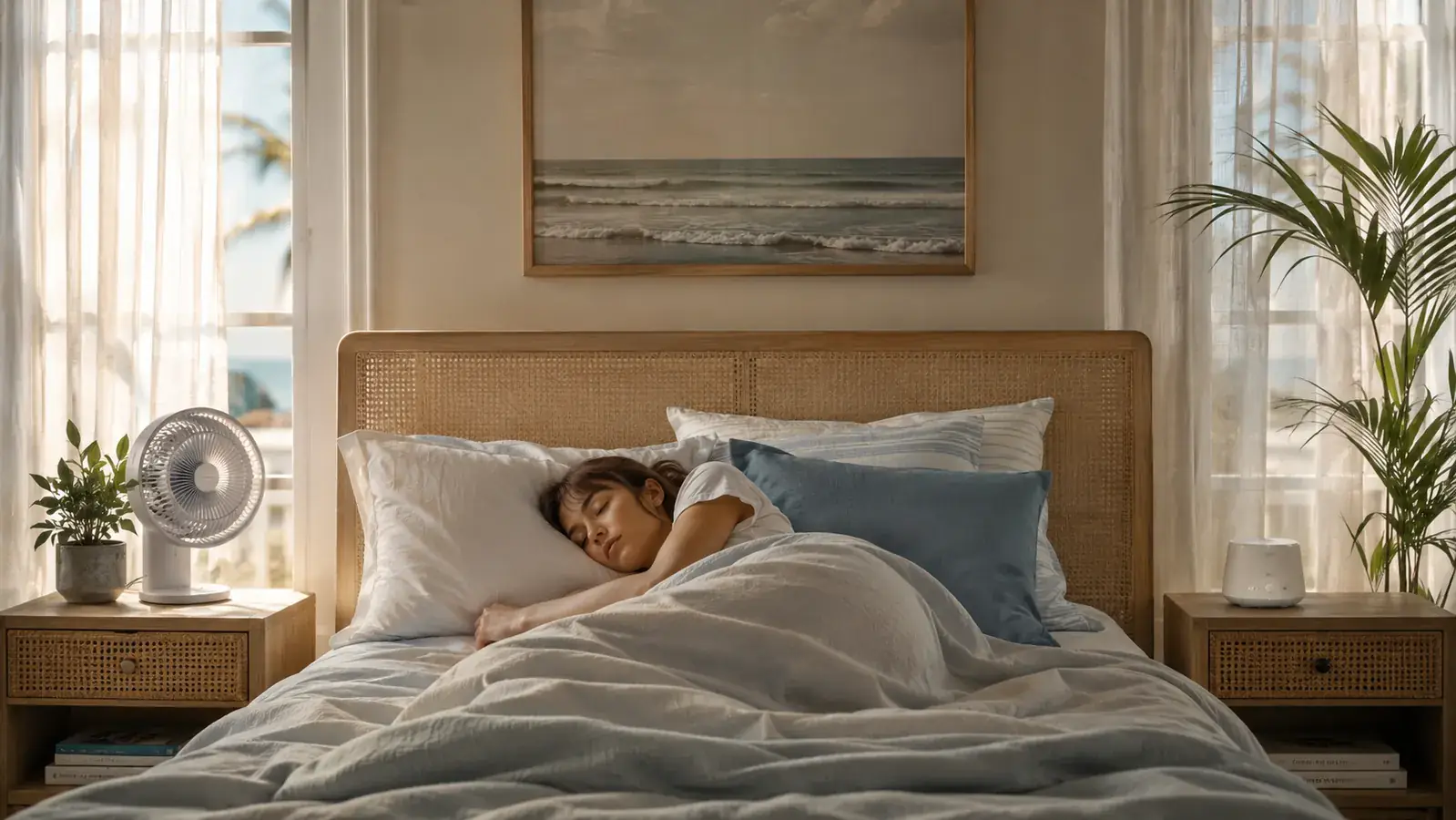
For twelve years I slept with a box fan running on the floor beside my bed. It was just what I did. The low hum covered the sound of cars on the street behind my house, and eventually I stopped questioning whether it was actually helping or just the habit of it. Then last winter my fan developed a rattle. A real rattling sound, not a pleasant one, and suddenly I was awake at two in the morning wondering why I had never tried an actual sound machine. That question led me to the BrownNoise sound machine with 30 sounds and a built-in night light, and I have been sleeping with it every night since. Here is what I found when I compared the two honestly.
The short answer is this: a box fan works, but a dedicated sound machine works better, and it does so without blowing air across your face, running up your electricity bill, or locking you into a single monotonous sound. If you are a light sleeper who wakes at small sounds, or if you live somewhere with unpredictable noise outside your window, the sound machine wins almost every category that matters for sleep. But there is more nuance than that, and I will walk through all of it.
| Sound Machine | Box Fan | |
|---|---|---|
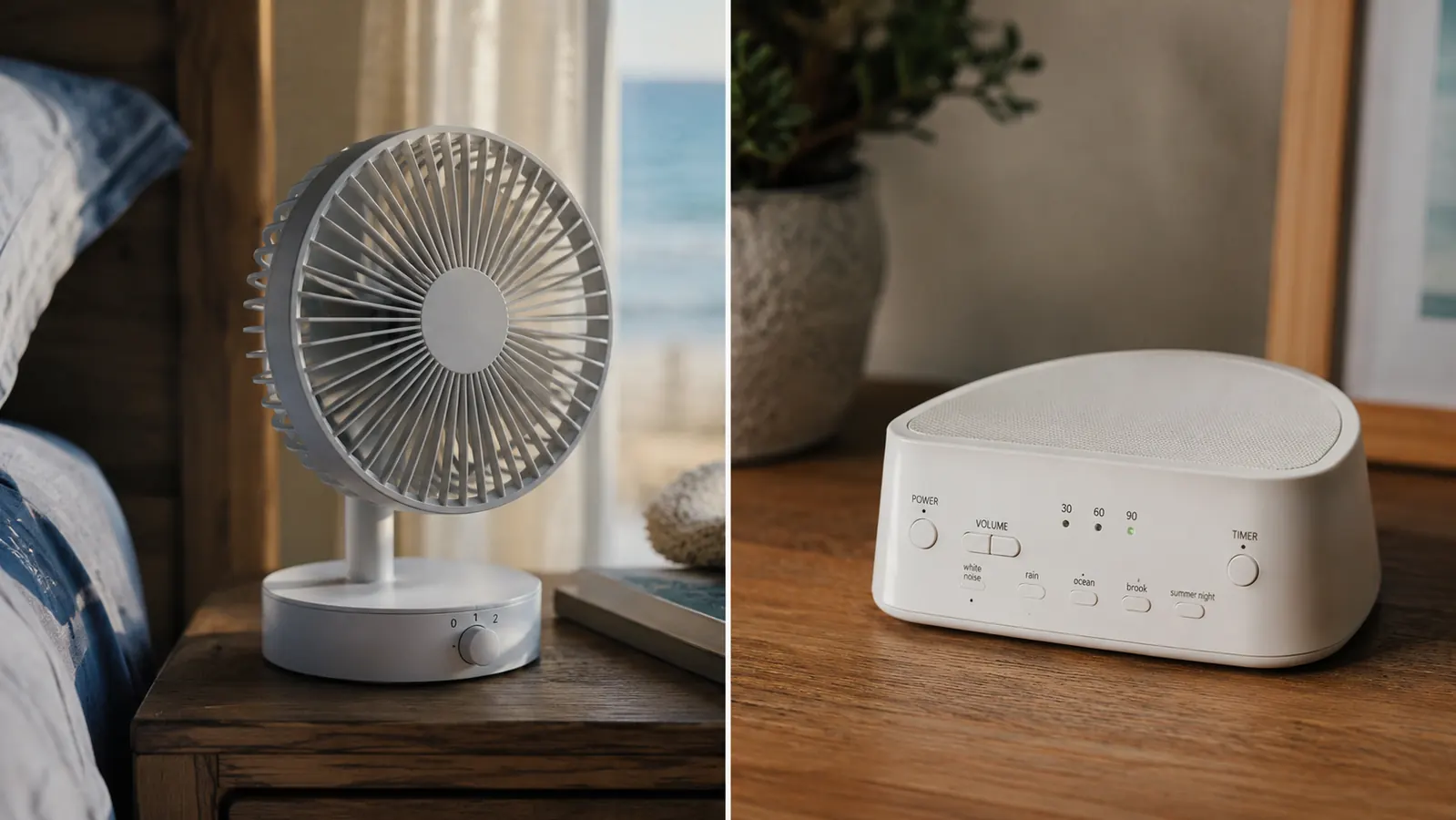
| Sound variety | 30 sounds including brown noise, white noise, rain, ocean, fan tones, lullabies | One sound: mechanical fan hum (no adjustment beyond speed) |
| Volume control | Precise dial with wide range, from barely audible to room-filling | 3-speed switch; low speed is quiet but often too weak to mask real noise |
| Air movement | None (sound only, no airflow) | Continuous airflow, which cools the room but can dry out sinuses and eyes |
| Sleep-specific features | 12-color night light, timer function, compact size for travel | No timer, no light; must be switched off manually or run all night |
| Noise masking consistency | Steady, loop-free sound with no mechanical variation or wobble | Consistent at steady state but rattles and pitch-shifts as motor warms up or ages |
| Electricity use | Low draw, typically under 5 watts | 20 to 100 watts depending on fan size; runs all night |
| Portability | Palm-sized, USB powered, travels in a toiletry bag | Bulky, corded, not practical for travel |
| Current price range | BrownNoise model | Mid-range for a box fan, but ongoing electricity cost adds up |
Where the Sound Machine Wins
The biggest difference I noticed within the first week was control. With a fan, you get three speeds and no other choices. With the BrownNoise machine, I could dial in exactly the sound I wanted on a given night. When the neighbors had people over on a Friday, I turned it up and switched to brown noise, which is a deeper, softer tone than white noise and easier to sleep through. When my dog Biscuit was restless in the hallway, a light rain setting kept that sound from snapping me fully awake. That kind of flexibility matters more than I expected.
The night light is also genuinely useful in a way I did not anticipate. I set it to a dim amber, and now when I wake up at night I can orient myself without turning on a lamp. It does not disturb my sleep the way even a low lamp would. The 12 color options mean you can find something that suits the warmth of your room. I tried blue for about one night and switched to amber immediately. That is a personal preference, but the range is there.
With a fan, you get three speeds and that is the whole menu. With the BrownNoise machine, I had 30 sounds and a volume dial. On a loud night, that difference is everything.
The other thing that surprised me was how much better my throat and sinuses felt in the mornings. I had not connected the fan to the dryness I was waking up with, because it had been happening for years and I had just accepted it. Without airflow blowing across my face all night, that went away within about two weeks. My optometrist had mentioned dry eyes as well, and I am convinced the fan was part of that. The sound machine produces no air movement at all.
If noise is keeping you awake, this is the simplest fix that does not involve blowing air across your face all night.
The BrownNoise sound machine has 30 sounds, a gentle night light, and fits in the palm of your hand. It runs on USB, travels easily, and costs less than most box fans.
Amazon Check Today's Price on Amazon →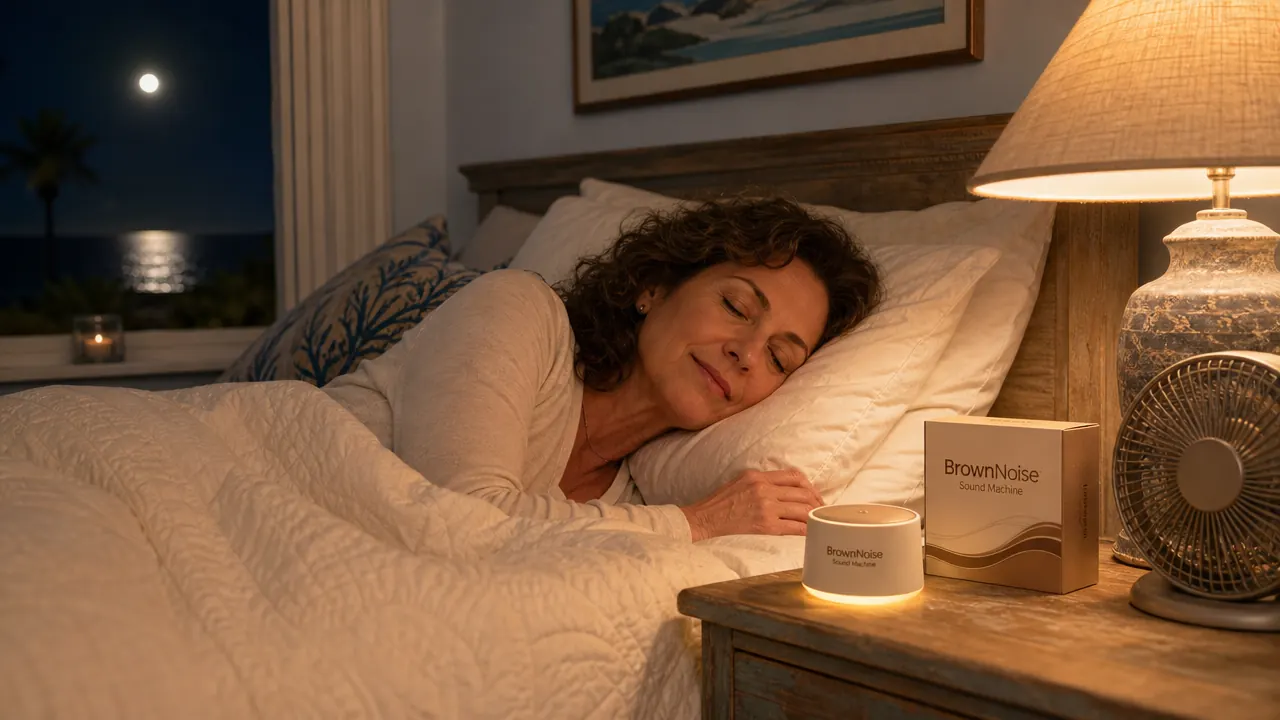
Where the Box Fan Wins
A fan does one thing the sound machine simply cannot do: it moves air. If you sleep hot, or if your room genuinely needs circulation, a fan is serving a function that is separate from sound masking entirely. I live near the coast and my bedroom stays cool most of the year, so air movement is not something I miss. But if you are in a warm climate or going through a phase of life where you tend to overheat at night, you may find that you actually want both a fan and a sound machine, and they can coexist fine on the same nightstand.
The fan also wins for sheer familiarity. If you have slept with fan noise for a decade, your brain has learned to associate that specific sound with sleep. Switching sounds a small change but your nervous system has to adjust. I noticed a few nights of lighter sleep during the transition before the sound machine became the new normal. It took about a week. If you are resistant to that adjustment period, a fan is zero friction.
The Noise Masking Question: Which Actually Works Better
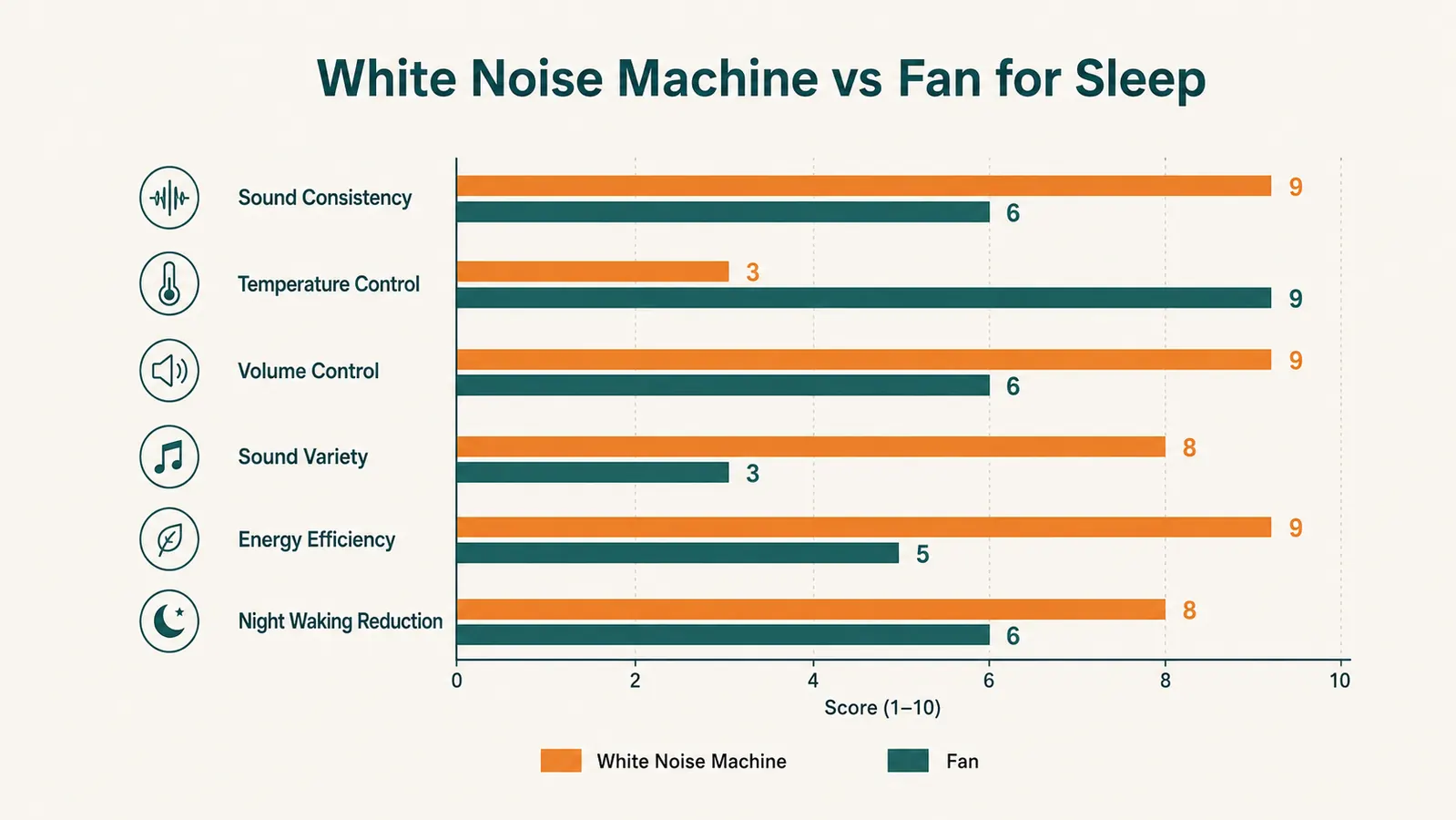
This is the core of the comparison for most people. Which one does a better job of covering up the sounds that wake you? Based on my experience, the sound machine wins this, and here is why. A box fan creates a fairly narrow frequency band. It covers low-frequency rumbles reasonably well, but higher-pitched sounds, a dog barking, a car alarm, someone talking loudly on the street, can cut right through it. White noise and brown noise are spectrally broader. They fill in more frequency ranges at once, which gives you better coverage across the range of sounds that actually interrupt sleep.
The BrownNoise model also lets you push the volume higher than most fans will go without the sound becoming uncomfortable. A fan at high speed is loud but also turbulent and physically intrusive. A sound machine at high volume is just... consistently loud, in a way that feels more like a blanket than a blast. I did not need high volume most nights, but on the nights when trucks on the road behind my house were going late, it made a noticeable difference.
One more thing worth saying: a fan develops mechanical noise over time. Rattle. Wobble. Bearing wear. My fan developed its rattle at the three-year mark, and that rattle was worse for my sleep than the original problem the fan was solving. A sound machine playing a digital loop does not degrade that way.
Who Should Buy the Sound Machine
Buy the BrownNoise sound machine if you are a light sleeper who wakes at unpredictable noises, if you travel and need consistent sleep away from home, if you sleep with a partner and one of you is more noise-sensitive, or if you are tired of running a full-sized fan just to cover sound. At a budget-friendly price point, it costs less than most fans and draws a fraction of the electricity over the course of a year. It is one of the better-value purchases in the sleep accessories category.
It is also worth buying if you are already using a fan but suspect the airflow is drying out your throat, eyes, or sinuses. You may not have connected those symptoms to the fan because it has been part of your routine for so long. I went years without making that connection.
Who Should Keep Using a Fan
If you genuinely need air circulation in your bedroom for temperature regulation, a fan is still doing something the sound machine cannot replace. Run both if that is what your situation calls for, and turn the fan toward the room rather than at your face. If you are deeply habituated to the specific sound of a fan and the idea of switching feels stressful, that is a real thing, your sleep is associated with a learned cue. The BrownNoise machine does have fan-tone sounds in its menu, so you could match the general frequency profile of your fan while getting the other benefits, but it will not be identical.
Also, if you are completely happy with how you sleep right now, there is no reason to change what is working. The sound machine is the better tool for noise masking and overall flexibility. But if your fan is doing the job and you are sleeping well, I am not here to talk you out of it.
My Honest Take After Switching
I have slept better since switching than I did in the last few years of using the fan. Part of that is brown noise specifically, which I find genuinely easier to sleep through than white noise or fan hum. Part of it is the volume dial, which lets me fine-tune based on the night. Part of it is the absence of air drying out my sinuses. I did not expect that last one to matter as much as it does.
The BrownNoise machine has 4.6 stars across nearly 12,000 reviews, which is a lot of light sleepers agreeing that it does what it promises. I read some of those reviews before buying, and the consistent thread was people who had been using fans for years and could not believe how easy the switch was. That tracks with my own experience. The adjustment period was about a week. The benefits stuck around.
If you want more detail on my full eight-week experience with this machine, including the sounds I use most, how the night light holds up over time, and whether the timer function is actually useful, I covered all of that in my long-term white noise machine review. And if you want a closer look at the sound science and what nobody mentions in most reviews, my honest white noise machine review goes into that in more depth.
Twelve years of fan noise, and switching took about a week. The BrownNoise machine now sits on my nightstand every single night.
30 sounds, a useful night light, USB power, and a volume dial that actually gives you control. Budget-friendly at current pricing. Worth trying if noise is what is keeping you up.
Amazon Check Today's Price on Amazon →