
For most of my fifties I woke up sometime between two and four in the morning, damp and uncomfortable, kicking off blankets I had pulled up just an hour before. I tried turning the thermostat down, switching to a lighter comforter, even sleeping with a fan pointed directly at the bed. Some of those things helped a little. None of them fixed the root problem, which was that my mattress itself was holding and radiating heat back at me all night long. The surface I was sleeping on had no way to release that warmth, so it just built up. I did not figure this out for years.
What finally worked was approaching the problem in layers, starting with the biggest heat source (the mattress) and working outward. A 3-inch PERLECARE cooling gel memory foam topper was the centerpiece of that fix, and once I had it in place the other adjustments I made started to actually matter. If you are waking up hot or struggling to fall asleep because you feel too warm, this guide walks through exactly what I did, step by step, including what to do before the topper goes on and what to layer on top of it.
Still sleeping hot? This is the topper that finally changed things for me.
The PERLECARE 3-inch gel-infused memory foam topper has a 4.4-star rating from nearly 2,700 reviewers. It fits a queen bed, includes a fitted cover, and works on top of any existing mattress without voiding a warranty. Check the current price before buying anything else in this guide.
Amazon Check Today's Price on Amazon →Step 1: Identify Where Your Heat Is Coming From
Before you buy anything, spend one or two nights paying attention to when you overheat and what it feels like. Is your back and seat area the hottest? That is almost always the mattress trapping heat beneath you. Is it your torso or face? That is more likely your blanket or duvet. Knowing the source keeps you from spending money fixing the wrong layer. In my case the heat was definitely coming up from below. My back would be damp within two hours of lying down, even on cool nights. The mattress, a ten-year-old innerspring with a foam pillow top, was the culprit. The pillow top had compressed over the years and it functioned basically like a heat sponge.
If your heat problem is blanket-side, a lighter duvet or a moisture-wicking top sheet may be enough on its own. But if you are warm at the contact point between your body and the mattress, no amount of fan-airflow or thermostat adjustment will fully solve it. The foam or padding directly under you needs to be able to move heat away from your body rather than absorbing and re-radiating it. That is the job a gel-infused topper is actually designed to do, and it is why this step is important before you spend a dollar.
Step 2: Cool the Room First, Then Optimize the Bed
A cooling topper works best in a room that is already reasonably cool. Sleep science research consistently points to a bedroom temperature between 65 and 68 degrees Fahrenheit as the sweet spot for most adults. That is cooler than most people keep their homes during the day. If your bedroom stays above 72 at night because of poor airflow or retained afternoon heat, even the best cooling foam will have a harder time keeping pace. Before installing a topper, I made two room-level changes: I started keeping the bedroom door cracked so cross-ventilation could work, and I put a small fan on the dresser aimed at the upper wall rather than directly at the bed. Indirect airflow keeps the room temperature even without drying out my skin or making noise that woke me up.
If you live somewhere with warm nights or limited airflow, a programmable thermostat can help enormously. Setting it to drop two or three degrees an hour before your bedtime pre-cools the room so it is already at sleep temperature when you lie down. This is a small change that costs nothing extra on a programmable system, and paired with the topper it made a noticeable difference within the first week for me. I live near the coast so I have ocean air helping on most nights, but even in summer when the breeze drops off, the combination of a cooler room and the PERLECARE topper kept things manageable.
Step 3: Install the Cooling Gel Mattress Topper Correctly
When the PERLECARE topper arrived it came vacuum-compressed in a box. I unrolled it on the bed and let it expand for a full 24 hours before sleeping on it. That off-gassing period is real and not something to skip. The foam smell fades completely by the time it has fully expanded, but if you try to sleep on it the same day it arrives, you will smell the manufacturing process and the foam may not be at its full thickness yet. I opened the bedroom windows and let it air out while I went about my day. By evening it had reached its full 3 inches and the smell was gone.
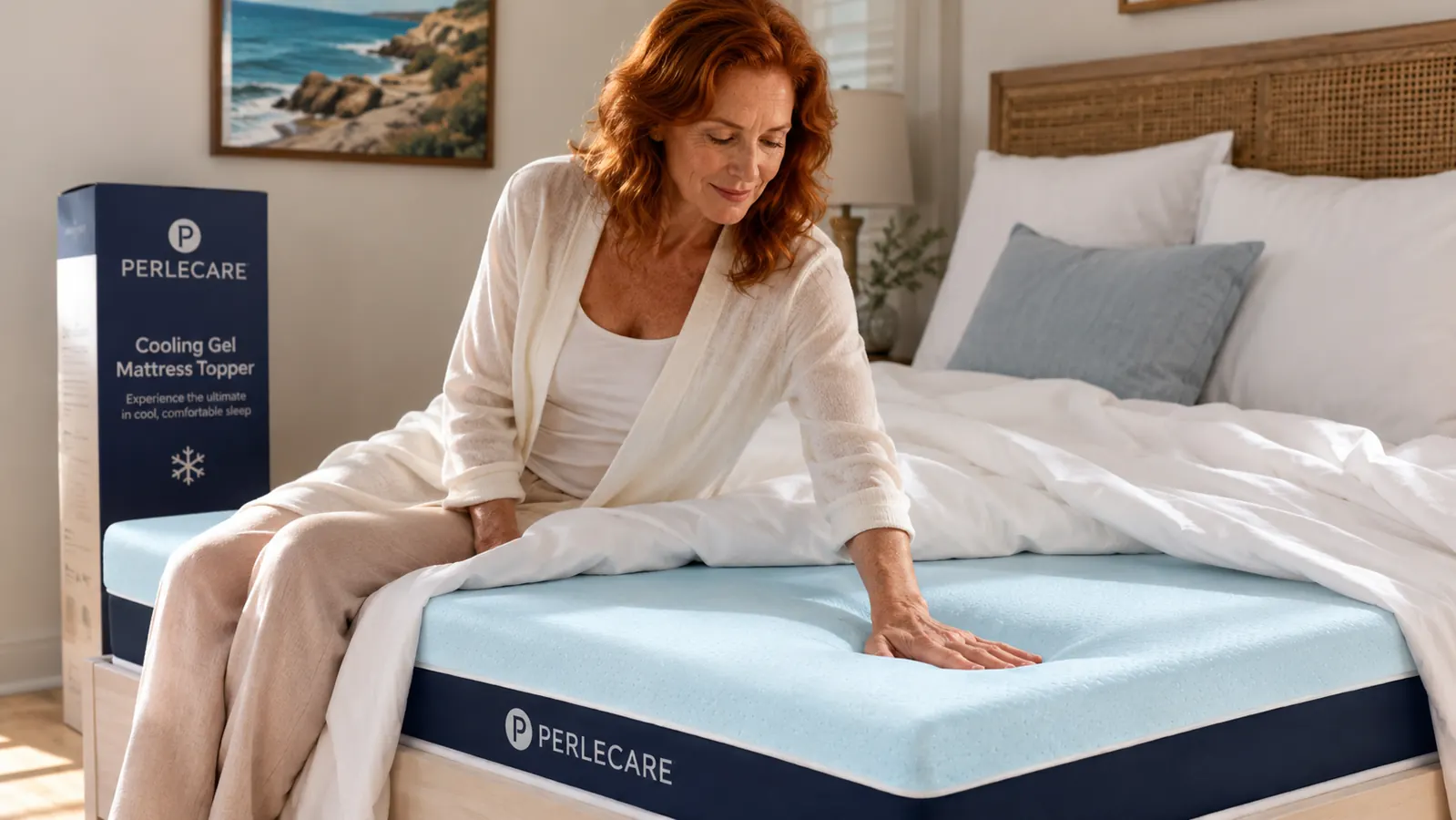
The topper comes with its own zippered cover, and I recommend keeping that cover on rather than trying to fit a separate mattress pad over the foam. The included cover is thin enough not to block airflow to the gel layer below, and it protects the foam from body oils which degrade memory foam over time. Place the topper directly on top of your existing mattress surface, cover still on, then put your fitted sheet over the whole assembly. A deep-pocket sheet rated for at least 16 inches of mattress height is helpful here since you are adding 3 inches to whatever you had before. I had to swap to a deep-pocket set and I am glad I did because a sheet that barely stays on at the corners defeats the whole setup.
Step 4: Choose the Right Sheet and Top Layer
A gel foam topper can only do so much if you cover it with the wrong sheet. Thick cotton flannel, polyester microfiber, and heavy percale weaves all trap heat against the foam surface and reduce the gel layer's ability to dissipate warmth away from your body. What works best is a natural fiber sheet in a loose, open weave: linen, Tencel (lyocell), or a lightweight cotton percale in the 200 to 300 thread count range. These materials breathe and wick moisture. They do not insulate the foam surface. I switched from a 400-thread-count cotton sheet to a lightweight linen blend and felt the difference immediately on the first warm night.
For your top layer, the same logic applies. A thick comforter over the top negates the cooling work happening underneath you. For warm months I use a light cotton waffle-knit blanket. In cooler months I use a slightly heavier cotton quilt. I stopped using a duvet insert entirely except on genuinely cold nights, and that alone reduced how often I kicked covers off at 3 AM. The goal is to stay comfortable without overcompensating in either direction. The topper handles the heat coming up from below. Your top sheet and blanket should be light enough not to trap heat on top of you.
Step 5: Give It Two Full Weeks Before Deciding If It Is Working
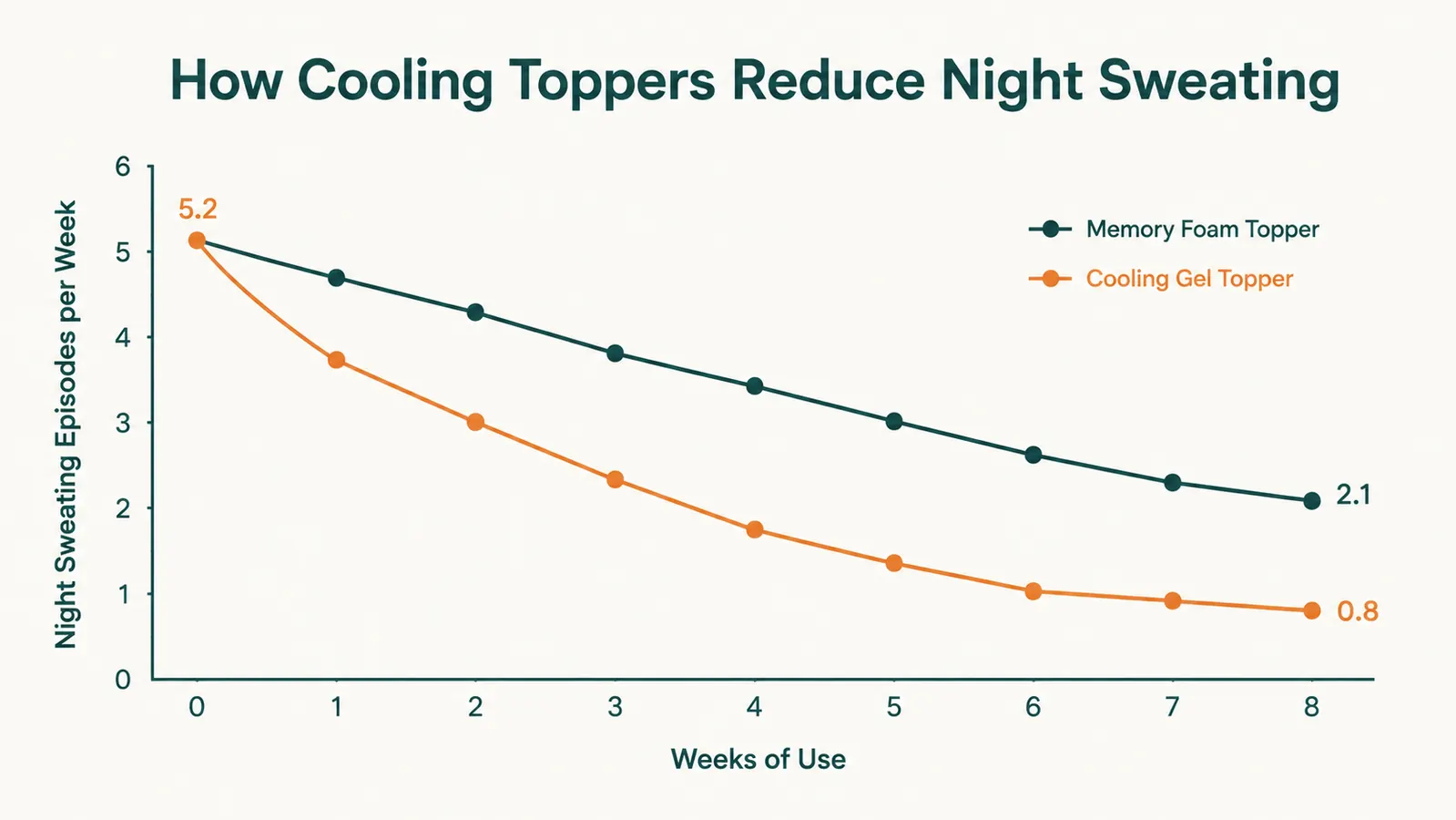
Memory foam takes a week or more to fully conform to your sleep position and body weight. In the first few nights, the foam may feel firmer than expected and you may not feel the full pressure-relieving or thermal effect yet. I was moderately skeptical after the first three nights because I had not noticed a dramatic change. By the end of the first week I realized I had not woken up sweating once since the topper went on. It was a gradual improvement rather than an overnight transformation, and I almost returned the topper before the evidence had time to accumulate. Give it 14 nights before making a final call.
Track your sleep quality simply: note on your phone each morning whether you woke up hot, how many times you woke up, and roughly how you feel. After two weeks, compare the first three nights to the most recent three. Most people who sleep on a cooling gel topper see their worst overheating nights in the first few days, then a steady improvement as the foam breaks in and they get used to the new sleep surface. If you are still waking up just as hot after 14 nights with the room-temperature and bedding steps also in place, the problem may be hormonal or medical, and it is worth a conversation with your doctor.
What Else Helps
Once the topper is in place and you have your bedding sorted, there are a few additional habits that reinforce the cooling system without costing much. Taking a warm shower about an hour before bed actually helps your core temperature drop faster afterward, which speeds up the body's natural cooling process that triggers sleep. A warm shower raises skin temperature, which helps heat escape from your body through your skin surface, and the resulting temperature drop signals to your brain that it is time to sleep. Counterintuitive but real. I started doing this every night and my time-to-fall-asleep shortened noticeably.
Keeping your feet outside the covers is another small trick that regulates body temperature more effectively than most people realize. The feet and hands are major heat-release points for the body, and uncovering them helps your cooling system do its job. I also stopped eating large meals or drinking alcohol within two hours of bed. Both raise core body temperature during digestion, which is the exact opposite of what you need. These are not revelations, but when you combine them with a proper cooling topper and breathable bedding, the cumulative effect is real. I went from waking up damp two or three times a week to sleeping through the night consistently, and these small habits were part of why it held up.
The foam handles the heat coming up from below. A light sheet and a cooler room do the rest. When all three work together, the hot-sleeping problem stops being the first thing you think about when you go to bed.
For anyone who has struggled with overheating and tried the fan-and-thermostat approach without lasting success, I would say the topper is the piece most people are missing. It addresses the one thing that fans and room temperature cannot fix on their own: the heat your body generates getting trapped in the foam or padding directly beneath you. That is where the PERLECARE gel layer makes its difference. You can read a longer look at how it performed over eight weeks in my full review linked below, but the short version is that the combination of gel infusion, open-cell foam construction, and the 3-inch depth gave me a surface that was noticeably cooler from the first week and stayed that way.
Ready to stop waking up hot? The PERLECARE topper is where I would start.
With more than 2,600 verified reviews and a 4.4-star rating, the PERLECARE 3-inch cooling gel topper is one of the most consistently reviewed options in this price range. It works on any existing mattress and includes a fitted cover. Check today's price on Amazon before you order anything else.
Amazon Check Today's Price on Amazon →