
Let me tell you what most cooling mattress topper reviews leave out. They tell you about the gel. They tell you about the memory foam. They tell you about the cover with the little snowflake graphics. What they do not tell you is what happens on night one when you peel back the plastic and the whole bedroom smells like a tire warehouse. They do not mention the first week when you sink deeper into the foam than you expected and spend three nights wondering if you made a mistake. And they absolutely do not talk about the edge support, or rather the lack of it, that almost sent me rolling out of bed at 2 in the morning.
I have been sleeping on the PERLECARE 3-inch cooling gel memory foam topper for close to ten weeks now, and I want to give you the full picture before you spend your money. My name is Margie. I live near the ocean, I am recently retired, and for years I woke up at 3 AM damp and restless, which is no way to start a morning walk with my dog. I eventually found a topper that helped me, but the path there involved some real surprises. This review is about those surprises.
The Quick Verdict
Real cooling effect after the first week, but the off-gassing, initial sinkage, deep-mattress fit issues, and weak edge support are things you deserve to know about before you open the box.
Amazon Check Today's Price →Still waking up overheated? Here is the topper that worked for me after the rough first week.
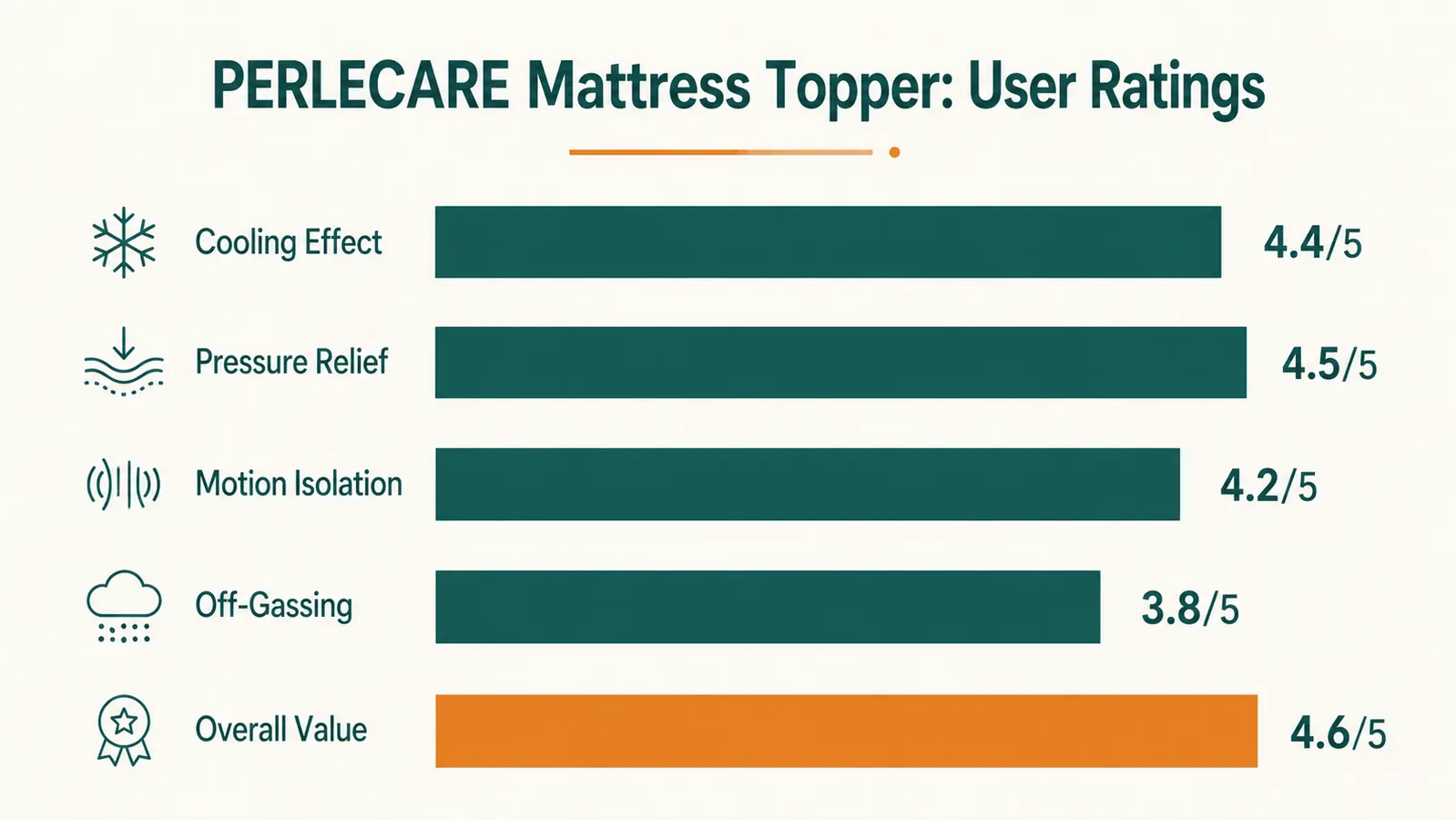
The PERLECARE 3-inch gel topper has 4.4 stars across nearly 2,700 reviews. If you go in knowing what to expect in the first five days, you are far more likely to stick with it long enough to feel the difference.
Amazon Check Today's Price on Amazon →Night One: The Smell Nobody Warned Me About
Memory foam off-gasses. This is not a PERLECARE problem specifically. It is a memory foam problem. Any polyurethane-based foam releases volatile organic compounds when it is first unwrapped, and gel-infused foam is no exception. I knew this in the abstract. What I was not prepared for was the intensity. I pulled the topper from its box in my bedroom at about four in the afternoon, let it decompress on the bed, and by dinner time the entire upstairs had a sharp chemical smell that I can only describe as somewhere between new yoga mat and fresh car interior.
I aired the room out aggressively. Windows open, ceiling fan on, the topper draped over a chair on the back deck for about six hours before I brought it back inside. By night one I slept on it anyway, because I am impatient. The smell was noticeable but not intolerable. By day three it was mild. By day five it was gone. If you are chemically sensitive, or if you share your room with someone who is, give this thing a solid 48 to 72 hours of airing outdoors or in a well-ventilated garage before you make your bedroom its home. That part is genuinely non-negotiable.
The Sinking Feeling: What Three Inches of Foam Actually Does to Your Body
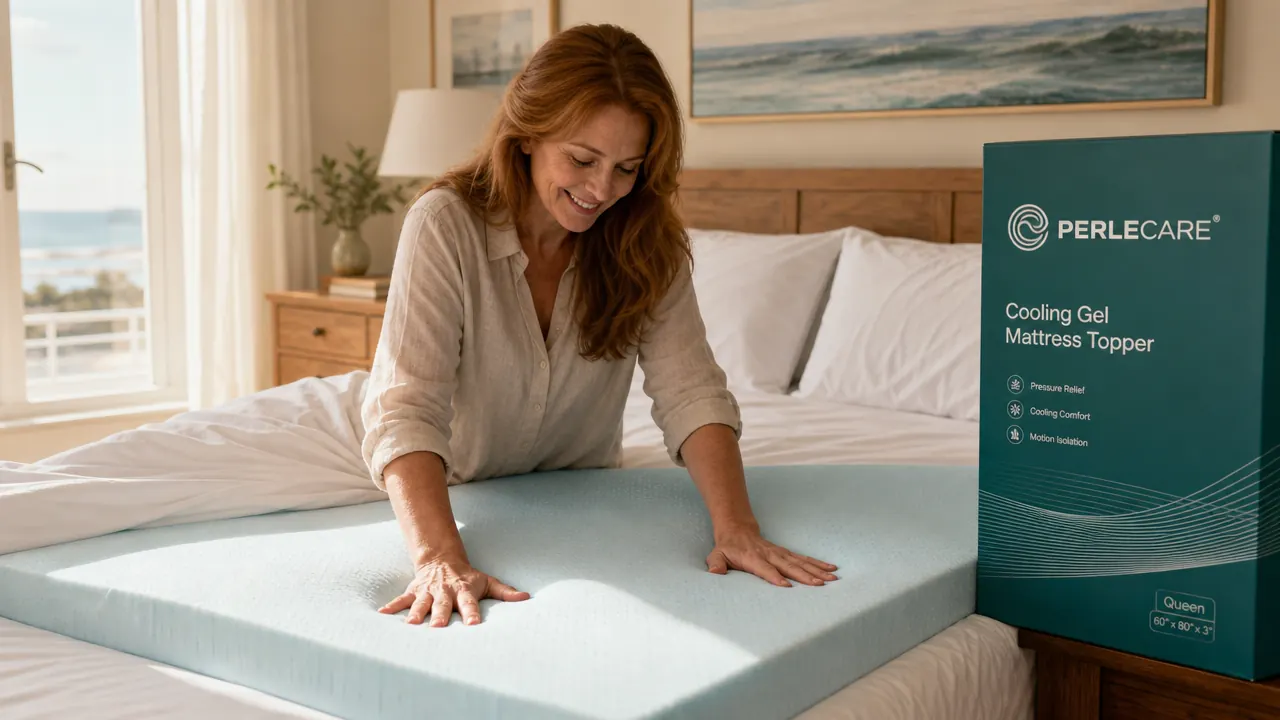
I am 5 feet 4 inches, around 145 pounds, and a side sleeper. I went into this expecting something that would feel supportive and cool, like sleeping on a firm surface with a comfortable layer on top. What I got in the first few nights was something more like sleeping in a hammock made of marshmallow. I sank into the foam deeply, felt my hips dip lower than my shoulders, and woke up on night two with a slight ache in my lower back that I had not had before.
Here is what I eventually figured out. Memory foam needs time to calibrate to your weight and sleep position. The foam also comes compressed from shipping and needs a few days of body-heat exposure to reach its full loft and responsiveness. By day seven the feel had changed noticeably. I was still cradled by the foam, but I had more surface support underneath me. The back ache faded. But if you lie down on this topper the first night and think it feels too soft, give it a week before you decide anything. That initial marshmallow quality moderates.
If you lie down on this topper the first night and think it feels too soft, give it a full week before you decide anything. That initial quality changes more than you would expect.
The Deep Mattress Problem Nobody Mentions
My mattress is a pillow-top queen. The mattress itself is probably 13 inches tall. Adding a 3-inch memory foam topper means my sleeping surface is now roughly 16 inches off the floor. That sounds fine in theory. In practice, it changed two things I did not anticipate. First, my fitted sheets no longer fit properly. I had standard queen sheets with a 12-inch pocket depth. They popped off the corner of the mattress consistently through the night. I had to buy new deep-pocket sheets, which I will be upfront about: that was an additional expense I had not budgeted for.
Second, getting in and out of bed became a small but real adjustment. I am fine with the height. But if you have a partner, a parent, or yourself with mobility limitations, stepping up to a 16-inch sleeping surface is genuinely harder than a standard bed height. The topper does not come with a solution to this. You either use a bed step stool or you manage. I did not see a single review mention this before I bought it, which is exactly the kind of thing I think people deserve to know.
Edge Support: The Part That Almost Made Me Return It
This is the honest part of the honest review. Memory foam toppers do not add edge support. They actually reduce it slightly, because you are now sitting on several inches of foam that compresses under your weight before you even reach the mattress edge. I noticed this the first time I sat on the side of my bed in the morning the way I always do, feet on the floor, body at the edge of the mattress. The topper compressed dramatically. I felt like I was sitting on the edge of a cliff made of Jell-O.
For a side sleeper who drifts toward the edge of the bed during the night, this is a real concern. I slept closer to the center for the first two weeks just to feel secure. Over time, as the foam became more responsive, the edge compression became slightly less dramatic. It is still noticeably softer at the perimeter than at the center. If you share a bed and both of you tend to gravitate to your own side, you need to know that the edge behavior of a foam topper is different from a spring mattress edge. If one of you is a serious edge sleeper, this may genuinely bother you.
What I Liked
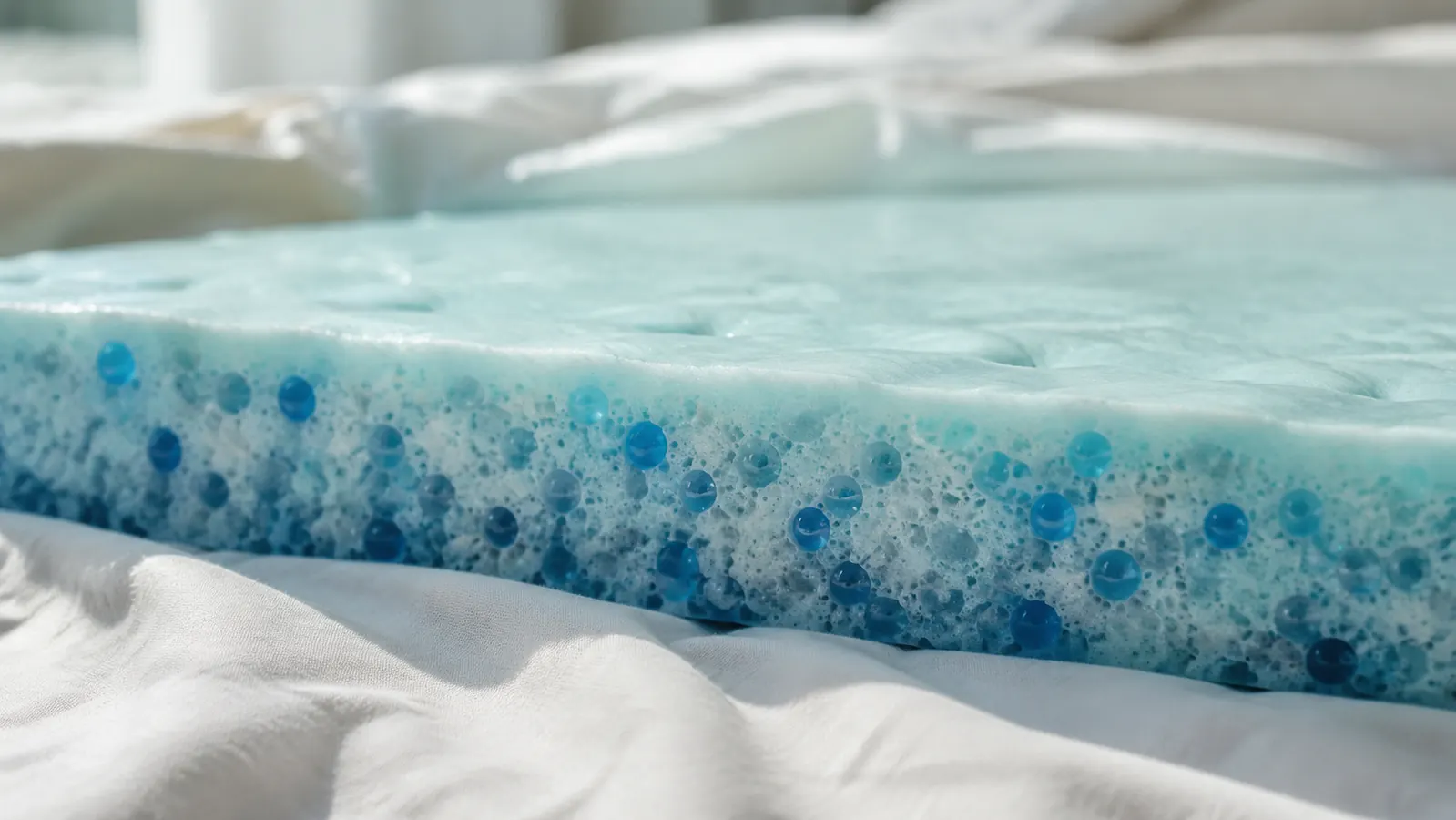
- Gel infusion delivers a real and lasting cooling effect after the first week, noticeably different from my un-topped mattress
- Pressure relief is genuine, especially through the hips and shoulders once the foam has fully expanded
- The bamboo-blend cover feels breathable and cool to the touch, even in the warmer months near the coast
- No motion transfer, which is a quiet but meaningful thing if you share a bed with a restless sleeper
- Nearly 2,700 reviews averaging 4.4 stars suggests this is not an experience unique to me
- Fits a standard queen frame without sliding if you use the cover straps
Where It Falls Short
- Off-gassing odor on days one through four is strong and requires aggressive ventilation before first use
- Initial sinkage feels excessive for lighter side sleepers; the first week may feel uncomfortably soft
- Edge support is poor, which is a limitation for anyone who sleeps at the perimeter of the mattress
- Deep mattresses (13 inches or more) will require deep-pocket sheets, which is an added purchase
- The 3-inch height addition makes high mattresses even higher, a consideration for anyone with mobility limitations
- It does not fix an already-damaged mattress; it layers over whatever is beneath it
Who Should Probably Skip This
I want to be useful to you here, so let me be specific. If you have a firm mattress that you like and your main complaint is overheating, this topper is worth considering. But if your mattress is already soft and sagging in the middle, adding three more inches of foam on top will not rescue it. You will still feel the valley. If you are sensitive to chemical smells or have respiratory concerns, the off-gassing period is a genuine barrier. If you sleep on the very edge of your bed every night and rely on mattress edge firmness, this topper will change that feel in a way you may not adjust to. And if you are on a very tall mattress already, do the math on sheet depth before you order.
The cooling effect is also more modest than some marketing language suggests. It does not feel cold. It feels neutral, which, when you are used to sleeping hot, is a meaningful improvement. But if you are expecting to feel like you are sleeping on a refrigerated surface, you will be disappointed. Gel-infused foam absorbs heat rather than actively removing it. The difference shows up over hours, not the first five minutes.
Why I Kept It Anyway
Here is the thing. After the first week, after the smell faded and the foam found its form, I started sleeping through the night in a way I had not managed in years. I am not prone to overstatement. I am 63 years old and I know that sleep changes in retirement and not always for the better. But the combination of the pressure relief at my hips and the genuinely cooler surface stopped the 3 AM wake-ups that had become my normal.
My dog Pistachio sleeps on a mat at the foot of the bed and I am convinced she noticed the difference before I consciously did. She started sleeping more soundly herself, which I attribute entirely to the fact that I was no longer shifting and sighing every two hours and disturbing the whole room. That is not a metric you will find in a spec sheet.
I also want to mention something about durability, because ten weeks is long enough to begin to see it. The foam has not compressed permanently in any spot. The bamboo cover has been through the wash twice (on gentle, air dry per the instructions) and still feels the same as new. The corner straps have held. For the price, I did not expect it to feel this structurally consistent after two months.

How It Compares to Just Changing Your Sheets or Running a Fan
Before I bought this, I tried cooling sheets. I tried a higher-thread-count cotton that was supposed to wick moisture. I tried pointing a fan directly at the bed. The sheets helped marginally. The fan helped with airflow but created a cold-spot problem where my shoulders felt chilled while my lower back stayed warm. None of those changes addressed the fact that my mattress itself was trapping heat. A topper changes the contact surface. That is the fundamental difference. If the surface your body lies on is heat-neutral, the upstream fixes matter less.
If you want a deeper comparison between a topper and other cooling approaches, I wrote more about the difference between a topper and a standard mattress pad and why they are not the same product for the same problem. And if you are still in the research phase, the 10 reasons a cooling topper specifically helps hot sleepers runs through the practical mechanics in a way that helped me understand what I was actually buying.
Who This Is For
If you sleep on a medium-firm mattress that is in decent shape, you sleep hot, and you are willing to give the product a genuine two-week adjustment period without returning it on day three, this topper is worth trying. Hot sleepers who are side or back sleepers and who stay near the center of the bed will get the most out of it. Adults in the 45-plus range who are starting to notice that their mattress does not sleep as cool as it once did, and who do not want to replace the entire mattress just yet, will find the topper a reasonable and cost-effective bridge.
Who Should Skip It
Skip it if your mattress is already sagging or causing pain. Skip it if you are chemically sensitive and cannot air a product out for several days. Skip it if you sleep primarily on the edge of the bed and need firm lateral support. Skip it if your mattress is already very tall (over 12 inches) and you have a partner or family member who has difficulty with bed height. And skip it if you need an immediate solution the night it arrives, because night one is genuinely not this product's best night.
You deserve to know what you are getting before night one. This is still the topper I sleep on.
The PERLECARE 3-inch gel memory foam topper has a 4.4-star average from nearly 2,700 buyers. Go in knowing the off-gassing clears by day five, the foam firms up after week one, and the edge is softer than your mattress. If you can give it ten days, most people who sleep hot end up keeping it.
Amazon Check Today's Price on Amazon →